The Gulch Nashville: Condos, Dining and Daily Life

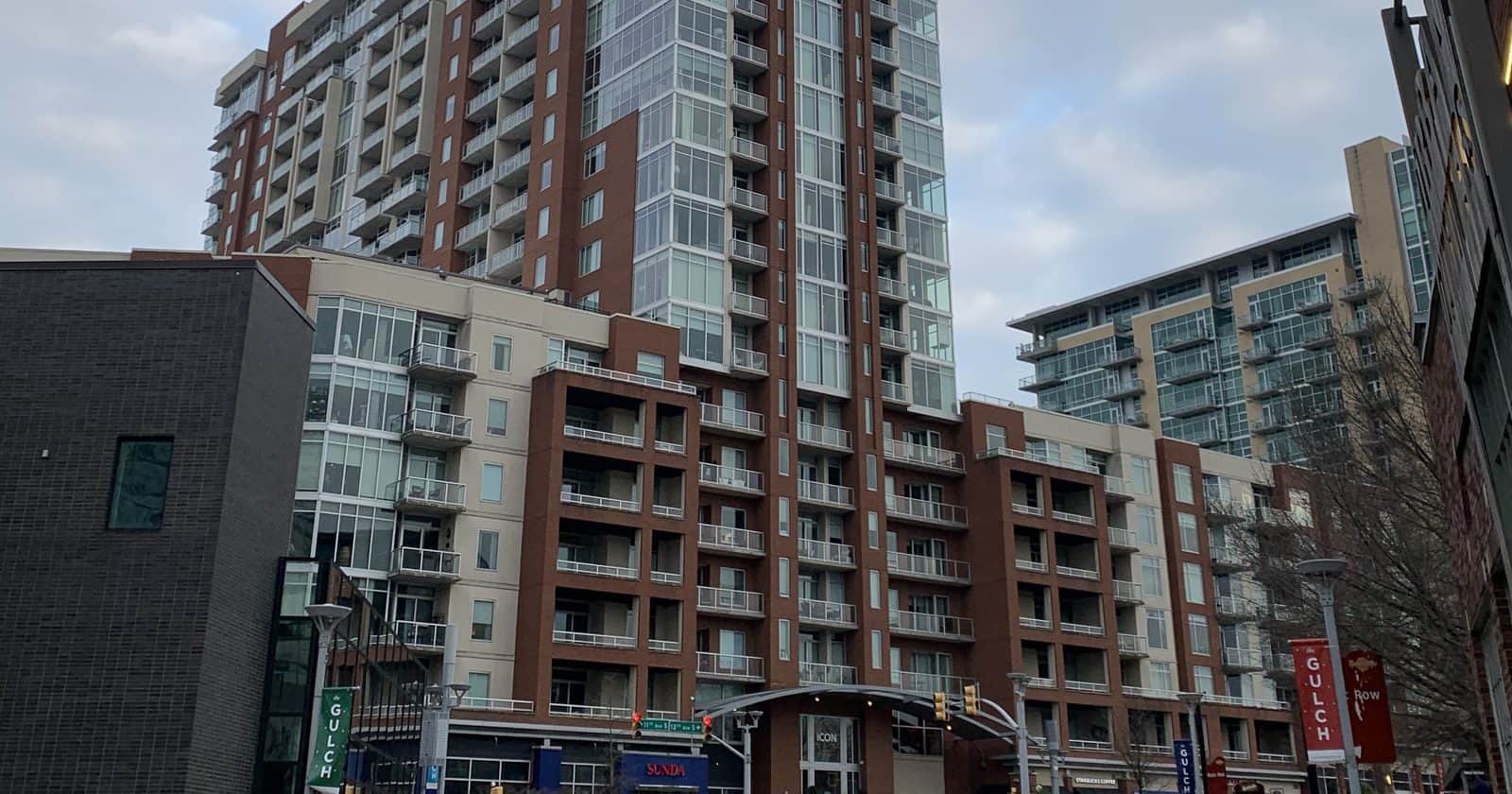
The Gulch Nashville: ICON tower seen from 11th Avenue, with Gulch street banners at street level
The ICON tower in the Gulch, seen from 11th Avenue. Photo by Brichar60 / Wikimedia Commons / CC BY-SA 4.0, cropped.

The Gulch Nashville is the city’s most urban neighborhood. High-rise condos and apartments sit on top of restaurants, rooftop pools look at the skyline, live music is a short walk from the lobby, and Broadway is minutes away. It is also one of the higher-priced places to live in Nashville, and the buildings back that up with concierge desks, pool decks and views.

This is the Nashville Area Homes guide to the Gulch. Nashville Area Homes is owned by Candie and Mike Worsham, licensed Tennessee brokers. Below is what the neighborhood is like, which buildings are condos and which are rentals, and what to ask before you sign anything.

Where is the Gulch in Nashville?

The Gulch is in the 37203 ZIP code, on the southwest edge of downtown and next to Music Row. The streets you will hear most are 11th Avenue South, 12th Avenue South, Division Street, Laurel Street, Pine Street and Demonbreun Street. Walk north on 11th or 12th and you reach Broadway and Union Station. Walk up the hill on Division and you are on Music Row. SoBro, Midtown, Edgehill and Wedgewood-Houston all touch its edges.

What is it like to live in the Gulch?

It is a neighborhood you walk. Coffee, brunch, dinner, a cocktail on a rooftop and a live show all fit inside a few blocks.

Here is the other side of it. The Gulch sits between the interstate and Broadway, so there is traffic noise, weekend crowds on the main streets, and construction that has not really stopped (we wrote about buying or selling near new construction). Walk the block on a Saturday night before you buy. Some people love the energy and some want a quieter street, and a unit on the back side of a building can feel like a different address.

What restaurants and live music are in the Gulch?

The food range is wide. Biscuit Love and Milk & Honey handle brunch. Ladybird Taco is a quick Mexican street food stop. The Iberian Pig does tapas, and Kayne Prime is a steakhouse. The Thompson Nashville hotel has Marsh House for seafood and a rooftop bar, L.A. Jackson, with skyline views from the top floor.

The music is real. The Station Inn opened in 1974, started by a group of bluegrass pickers and singers, and it has been at 402 12th Avenue South since 1978. It is still a listening room for bluegrass and classic country. Rudy’s Jazz Room is a few blocks away.

The walls talk too. The best known mural is the What Lifts You wings mural at 302 11th Avenue South, painted in 2016 by artist Kelsey Montague. People stand between the wings for a photo and share it with the hashtag #WhatLiftsYou. There are pocket parks and public spaces too: Noble Park, with its water walls, Grace’s Alley, a narrow pedestrian lane strung with lights, and the Gulch Dog Park.

What is the history of the Gulch?

The Gulch was a railroad yard before it was a neighborhood. The Nashville and Chattanooga Railroad was chartered in 1845, the first railway in Tennessee. Union Station at 1001 Broadway opened in 1900 and is a hotel today. Redevelopment began in the early 2000s, and at the end of 2008 the Gulch was certified LEED Silver for neighborhood development by the U.S. Green Building Council, which is why you still see reused industrial buildings between the towers.

What kinds of homes are in the Gulch?

Every home in the Gulch is in a multi-family building. The official Gulch directory lists 15 residential buildings as of November 11, 2026: 6 condominium buildings you can buy into and 9 apartment buildings you rent.

The condominium buildings:

  • Twelve Twelve, 1212 Laurel Street. A glass tower of 286 residences, nearly 60 percent of them two bedrooms or larger, completed in October 2014. It has a saline pool and spa, a green roof, outdoor kitchens, a 3,800 square foot fitness center, a dog wash and two guest suites.
  • Terrazzo, 700 12th Avenue South. Fourteen stories with a sixth-floor pool terrace, 24-hour concierge, underground parking and 11-foot-4-inch ceilings. The penthouses are two-story homes with ceilings up to 20 feet.
  • ICON, 600 12th Avenue South. A high-rise with a fitness center, a pool and covered parking.
  • The James, 1002 Division Street. The smallest of the group at 31 condominium residences, in one- and two-bedroom plans, some two-story, with a terrace and lounge and a secured garage.
  • Pullman at Gulch Union, 1212 Demonbreun Street. A 29-story, 300-residence tower, the newest of the condo buildings, with the first owners moving in during 2024.
  • Society Nashville, 915 Division Street. Listed under both condos and apartments in the directory, so confirm which units are for sale.

The apartment buildings: Albion in the Gulch, Aspire Gulch, Camden Gulch, Crossroads at The Gulch, Laurel House Lofts, Mercury View Lofts, Modera Gulch, Pine Street Flats and Prima at Paseo South Gulch. Several have rooftop pools, sky lounges and concierge service, and Pine Street Flats is LEED certified.

A condominium downtown isn’t just two bedrooms and two bathrooms. It might offer the convenience of walking to restaurants, enjoying live music, meeting friends for coffee, or having entertainment just steps from the front door.

That is an entirely different lifestyle from a home on five acres in the country. Neither is necessarily better.

Two units in the same building can feel like different homes. Floor, view, finish level and which way the unit faces all change what you are buying, so a low price on a unit is a reason to ask why.

How do parking and getting around work in the Gulch?

If you have a car, parking takes planning. Metro Nashville manages the metered street spaces and sets the rates and time limits, which change, so read the posted signs and pay stations. The garages and lots are privately run, and some are owned by MarketStreet Enterprises. Public parking can be hard to find on a busy night.

Ask each building how parking works for your unit. Is the space deeded, assigned or leased? Is there room for a second car? Where do your guests park? The answers differ from tower to tower.

You can skip the car for a lot of trips. WeGo buses run through and around the district, and the WeGo Star commuter train stops at Riverfront Station downtown on weekdays. Nashville BCycle has an electric bike-share station at 11th Avenue South and Pine Street, and the Gulch has bike lanes. Interstate 40 runs along its edge, and Nashville International Airport is a little over 5 miles away.

What should I ask before buying a condo in the Gulch?

When you buy a condominium you are buying into the building’s association as much as the unit. Read the HOA documents the way you would read an inspection report. Get these questions answered:

  • What are the monthly dues, and what do they cover?
  • How much is in the reserve fund, and is a special assessment planned?
  • What are the rules on pets and parking?
  • What do the documents say about leasing the unit?

Short-term rentals need their own look. In Davidson County, renting a place short term depends on its zoning and a valid Metro permit, and many buildings ban it or limit leasing in their own documents. Never assume a unit can go on a rental platform. Check the master deed, the bylaws and the zoning for that parcel before you count on the income.

What does it cost to live in the Gulch?

The Gulch is one of the higher-priced parts of Nashville. This article does not put a price number on it, because a number on a web page is old by the time you read it. Prices, dues and taxes are different in every building and on every floor. Ask for current figures on the exact unit you like: the listing, the association’s resale documents and the property tax record from the Davidson County Assessor of Property.

The market is not one market, either. Our post on why Nashville neighborhoods behave like separate markets explains why the Gulch can move differently from the rest of town, and our guide to buying in Nashville covers the basics.

Call Candie and we will pull them with you.

Common questions about the Gulch Nashville

Is the Gulch walkable?

Yes. Restaurants, coffee, shops, live music and the murals are all within a few blocks of the residential buildings, and there are bike lanes and bike-share stations for longer trips.

Are Gulch homes condos or apartments?

Both. The official directory lists 6 condominium buildings and 9 apartment buildings. Confirm what a specific unit is in the recorded master deed and the Davidson County property records.

Can I rent out a Gulch condo as a short-term rental?

Only if Metro zoning, a valid Metro permit and the building’s own documents all allow it. Many associations restrict or prohibit it. Read the bylaws before you buy.

Is the Gulch loud?

It can be. The neighborhood sits between the interstate and Broadway, with weekend crowds and ongoing construction. Visit at night and on a weekend, and ask about the exposure of the unit you are considering.

Which schools serve the Gulch?

Public schools in the Gulch are part of Metro Nashville Public Schools. Zoning can change, so confirm the current assignment for any address with the district before you make an offer. Our post on how to check a school boundary walks through it. Nashville Area Homes follows fair housing law.

What transit is near the Gulch?

WeGo buses run through and around the district, and the WeGo Star commuter train stops at Riverfront Station downtown on weekdays. Check current routes, fares and schedules with WeGo.

Call Candie. (615) 208-3313.

How to Read Your Home Inspection Report and What Matters

A home inspection report records the home’s condition on the day of the inspection. It isn’t a pass or fail grade. Most of what’s in it is routine maintenance. The items that matter are safety issues and major systems such as the roof, the foundation, plumbing, electrical and heating and cooling. Sort the report into those groups and it stops looking like a verdict.

Nashville Area Homes is owned by Candie and Mike Worsham, licensed Tennessee brokers with more than 30 years in Middle Tennessee real estate. Most people notice the page count first.

Nashville Area Homes conference room where we go over a home inspection report with buyers and sellers

What is a home inspection report?

A professional inspector, who in Tennessee is licensed through the Tennessee Home Inspector Licensing Program, goes through the home and documents what they find. They look at the visible condition of the structure, the roof, the plumbing, the electrical system, the heating and cooling, the water heater, the windows and doors, and more. The report lists the findings, usually with photos and short notes.

A good inspector isn’t grading the house. They’re documenting it so you can make an informed decision. Reading it that way changes how you use it.

Why is the report so long?

Inspectors note everything they see, from a loose handrail to an aging heating and cooling unit. A long report doesn’t mean a bad house. Buyers sometimes panic at the page count before they realize most of the items are minor maintenance notes.

The skill is telling the routine from the real. Cosmetic items and routine upkeep show up in almost every home, new construction included.

What actually matters in the report?

Sort the items into groups, starting with the ones that carry the most weight.

Safety issues come first. Exposed wiring, missing smoke detectors and a loose stair rail usually deserve attention before closing.

Major systems come next: roof, foundation, plumbing, electrical, heating and cooling. If one is flagged, a second opinion from a specialist is worth getting.

Moisture and water follow. Anything pointing to water getting where it shouldn’t go deserves a closer look, since small leaks can turn into larger repairs.

Routine maintenance sits lower on the list. Caulk, filters, worn weatherstripping and a squeaky door are normal for a lived-in home.

Cosmetic items come last. Paint, scuffs and minor wear are a matter of taste and budget.

One item in the first or second group can change a decision. A page of items in the last two usually doesn’t.

When do you call a specialist?

When the inspector flags a concern with a roof, foundation, drainage, electrical panel or other major system, a specialist’s follow-up look is worth the cost before you decide how to proceed. A general inspector sees a lot, and is often the first to say a certain item needs a deeper look. That’s the job working as intended.

If the report mentions anything about the lot or boundaries, The Invisible Lines Around Your Lot explains what a report can’t tell you there.

What does the report leave out?

It’s a snapshot of the home on the day someone went through it. It can’t predict how a roof will hold up in five years, and it can’t promise a water heater won’t fail next winter. What it can do is flag the things worth asking about before you close and not after.

It also can’t tell you how much to take on. Two buyers can read the same report and make different, perfectly reasonable decisions.

How do buyers use the report?

Once the report is in hand it becomes more than a checklist. Buyers can ask the seller to repair specific items, request a credit toward closing costs, ask for a price adjustment, or move forward fully informed about what they’re taking on. There’s rarely one right answer. It depends on the home, the market and what matters most to you.

Your contract sets the timeline and the process, so read it and ask your agent what applies to you. For a legal or financial opinion on a specific issue, ask an attorney or a financial professional.

Candie has a line on this from her years in the business: “small inspection issues can become large negotiation problems when they aren’t handled correctly.” She adds that “communication can save a transaction.” The request you make, and how you make it, can matter as much as the item itself. A short, specific list tends to get further than a long one. We talk about how an offer and its terms read to the other side in What an Offer Really Tells You Beyond the Number.

If you’re earlier in the process, our buyer’s guide covers each step, inspection included, and our current listings are a good place to start if you’re actively looking.

What should sellers know about inspections?

Sellers sometimes receive a copy of the buyer’s report and feel ambushed. It helps to expect it.

A pre-listing inspection, done on your own terms before the home goes on the market, lets you fix what matters and disclose what you can’t fix. You enter negotiations without surprises. It also tells you what buyers are likely to see, and we cover that side in What Buyers Notice First When They Walk Through Your Home.

Preparation matters here, as it does everywhere else in a sale. Ask any agent you interview how they prepare sellers for inspections and what they do when a buyer asks for repairs. That question is on our list in How to Choose a Listing Agent.

Common questions

Can I negotiate after the inspection?

Yes. A repair request, a price adjustment or a closing-cost credit are all common outcomes once the report is in. Which one makes sense depends on the issue, the market and the terms of your contract.

Do I need a separate inspector for the roof or foundation?

If the general inspector flags a concern with either one, a specialist’s follow-up look is worth the cost before you decide how to proceed.

What happens if I skip the inspection entirely?

You’re buying the home exactly as it sits, with no documented record of its condition. In a competitive offer that can be a deliberate choice, but make it on purpose and not as an afterthought.

Is a long home inspection report a bad sign?

Not by itself. Inspectors note everything they see, so even sound homes produce long reports. Look at what’s in the safety and major system groups before you look at the page count.

Does a new home need an inspection?

New construction can have items to note too. Many of the same routine and cosmetic findings show up in new homes. An inspection gives you a record of the home as it was on the day it was inspected.

Can Candie and Mike help me read my report?

Yes. If you’re weighing a report right now, we’re glad to go through it with you and talk about your options. Call (615) 208-3313 or contact us.

Candie Worsham, Nashville Area Homes. 3102 West End Ave, Suite 400, Nashville, TN 37203.

General information note: This article is general information in our own words. It is not legal, tax or financial advice, and it is not a recommendation of any neighborhood, school or district. Confirm school assignment with the school district. Nashville Area Homes follows federal and Tennessee fair housing law.

Photo by Sasun Bughdaryan on Unsplash

Questions to Ask a Realtor When Selling Your Home

Nashville Area Homes is owned by Candie and Mike Worsham, licensed Tennessee brokers who have worked in Middle Tennessee real estate for more than 30 years.

Start with this one: “Tell me about a time you advised a seller to change their price, and what happened.” The answer shows how the agent thinks, how they use evidence, and whether they will give you honest advice when it counts.

There are plenty of questions to ask a realtor when selling your home, and you can fit a dozen good ones into a listing interview. This one tells you the most and takes about two minutes. Below is why it works, what a good answer sounds like, and what to ask next.

Conference room at Nashville Area Homes where sellers bring their questions to ask a realtor when selling your home

Why is this the one question to ask a realtor before you sell?

Because it asks for judgment, and judgment is what you are hiring.

Agreeing with a seller is easy. It feels good in the room and costs nothing. Real advice sometimes sounds like, “I know what you hoped for, and here is what the evidence shows.” That is harder to say, and it is the part of the job that protects you.

I’ve learned that telling a client the truth is really more important than telling them what they want to hear. After decades in this business, there is no greater compliment than hearing, “Call Candie, she’ll tell you the truth.” This question lets you find out whether an agent works that way before you sign anything.

What does a good answer sound like?

Listen for four things.

  • A specific situation. Not “I always give honest advice,” but an actual home, an actual conversation and what was said.
  • Evidence. Comparable sales, condition, location, timing. A reason you can check, not a feeling.
  • Respect for the seller. The agent explained the advice, and the seller made the decision.
  • What happened next. An agent who can tell you how it turned out, good or not so good, is being straight with you.

If the agent needs a moment to think, give it to them. A thoughtful answer beats a quick one. And a general answer tells you something too. It tells you what you will hear when your own house is the one being priced.

Why does the price conversation matter so much?

The first weeks on the market are the biggest weeks your home will have.

A fresh listing gets its largest exposure the day it appears. Buyers who have looked at everything available are waiting for something new, and they check new listings first. An overpriced home can lose its strongest opportunity in those first weeks.

Here is what I have seen. I’ve seen three and four bedroom houses priced like five bedroom houses, and no one even looks at them. Then comes a price reduction. The same buyers see the listing again and wonder what is wrong with the home and why it didn’t sell the first time. After that, the listing has a hard time winning back its first impression.

The lowest price does not always win. The right price on day one gives you the most buyers to choose from. We go deeper in Starting High to Leave Room to Negotiate Can Backfire.

An agent who has talked a seller through a pricing decision has practiced the conversation you will need to have.

Which questions to ask a realtor when selling your home cover the price?

Once you have heard their story, ask about your own house.

  • Which comparable sales did you use, and why do they fit my home?
  • Which sales did you leave out?
  • What would a buyer like about my house, and what might give them pause?
  • If an offer comes in lower than we hoped, how will we decide what to do?

Pay attention to whether the agent explains or just announces. A number with reasons behind it is something you can weigh. A number with no reasons is a guess.

Bring any online estimate you have seen. Apps cannot see your kitchen, your lot or the road behind your fence. A good agent will go through the estimate with you instead of brushing it off. We explain more in What a Home Value Estimate From an App Cannot Tell You and Why Comparable Sale Does Not Mean What You Think It Means.

I’ve learned the highest price isn’t always the best offer.

What should you ask about local knowledge?

Ask the agent to describe your street, not only your neighborhood.

Where does traffic back up? What is confirmed about the area, and what is only talk? If the school assignment matters to you, how would the agent confirm it? The right answer points you to the school district’s own lookup for your exact address. Buyers test local knowledge the minute they walk in, and your agent should pass the same test before you list.

Local knowledge matters. Our post on what local knowledge actually means when you sell in Nashville has more.

What should you ask about marketing and communication?

Ask to see what your listing will look like before it goes live. A list of plans is not the same thing.

  • Who takes the photos, and who writes the description?
  • Where will the home be shown to buyers?
  • What happens in the first week, and what changes if showings are slow?
  • How often will I hear from you, and by phone, text or email?

Communication can save a transaction. Small inspection issues can become large negotiation problems when they aren’t handled correctly. Ask how the agent prepares sellers for an inspection and what happens when a buyer asks for repairs. Our post on what a home inspection report actually protects you from helps you get ready.

What should you ask about cost and the contract?

Ask how the agent is paid, what that payment covers and what can be negotiated. Ask how long the listing agreement runs and how it can end if the service is not what you were promised. Ask what costs you could owe if the home does not sell.

Read the agreement before you sign, and ask about anything that is unclear. It should all be in writing for you to review at your own pace. A clear, unhurried answer to these questions is a good sign.

How many agents should you talk to?

Two or three is enough for most sellers. Ask each to come to your house. An agent who has stood in your living room can tell you things a phone call cannot. Ask each the same questions, starting with the one above, and lay the answers side by side.

You can also check any agent’s license on the Tennessee Real Estate Commission website before you meet.

Our full walkthrough, including what to bring, is in How to Choose a Listing Agent Before You Sign. If you are getting ready to sell, you are welcome to try these questions on us. Ask us the hard version. Call (615) 208-3313 or contact us.

Common questions

What is the best question to ask a realtor when selling your home?

Ask for a time they advised a seller to change their price, and what happened. The answer shows whether the agent uses evidence, explains their reasoning and gives honest advice when it is not the easy thing to say.

How many questions should I ask in a listing interview?

You do not need a long list. Five or six good questions about pricing, marketing, communication and the contract will tell you more than twenty general ones. Write them down and ask every agent the same ones.

What should a good answer to the pricing question include?

A specific home or situation, the evidence behind the advice and what happened afterward. Comparable sales, condition and timing are the kinds of reasons to listen for. A general answer with no example is worth noting.

Should I choose the agent who recommends the highest price?

Not for that reason alone. A price should come with comparable sales and clear reasons. A high number with nothing behind it can cost you the first weeks of buyer attention, when a new listing gets the most views.

Can I interview Candie and Mike Worsham?

Yes, and we welcome it. Ask us these questions and the hard versions of them. Call (615) 208-3313 or contact us to set up a time.

Candie Worsham, Nashville Area Homes. 3102 West End Ave, Suite 400, Nashville, TN 37203.

General information note: This article is general information in our own words. It is not legal, tax or financial advice, and it is not a recommendation of any neighborhood, school or district. Confirm school assignment with the school district. Nashville Area Homes follows federal and Tennessee fair housing law.

Buying or Selling a House Near New Construction in Nashville

When new homes go up near an existing house, buyers start comparing the older house to brand-new finishes, layouts and systems, and the way the older house should be priced changes with them. Check what is planned or permitted nearby through the city or county. Ask your agent how older sales apply. And treat any sale that closed before the building started as a question, not an answer.

Nashville Area Homes is owned by Candie and Mike Worsham, licensed Tennessee brokers with more than 30 years in Middle Tennessee real estate. This guide is for anyone buying a house near new construction, and for sellers nearby. It describes how building activity changes the picture. It does not predict where values will go, and nobody can promise that.

An area with a lot of building in it does not behave like a settled one. Pulling comparable sales from an unchanging stretch is one job. Pricing or buying where the surroundings are changing is another.

The Nashville Area Homes team, who help buyers when buying a house near new construction

What changes when you are buying a house near new construction?

The comparison set grows. Buyers measure an existing house against new finishes, new layouts and new systems, and not only against other resales. That can help a seller or hurt one, depending on how the home is positioned and priced next to what is newly available.

For a buyer, it means more to compare and more to ask. For a seller, it means some of the competition may not have existed a year ago.

How do buyers compare a resale with new construction?

Line the two up on the same terms.

  • Layout and finishes. What does each one offer, and what would you change?
  • Systems and age. On the resale, ask the age of the roof, the heating and cooling, and the water heater. On the new build, ask what is new.
  • Lot and yard. Compare sizes and where the house sits on the lot.
  • Warranty. Ask whether a builder warranty applies to the new home and get the terms in writing. Ask what the seller of the existing home will disclose.
  • Timeline. A home under construction has a completion date that can move. A resale has a possession date you can plan around.
  • Fees. Ask what any neighborhood association charges and what the charge covers.

Neither choice is better by default. The right comparison is the one that fits what you need.

How do you find out what is being built nearby?

Go to public records before you go to conversation.

Building permits are kept by the city or county codes or permits office, and many offices publish them online. Rezoning and planning filings sit with the planning or zoning office, which posts applications and meeting agendas. Rezoning requests often come with a notice posted on or near the site. Planning commissions and councils publish their agendas ahead of time.

In Nashville, the Metro Nashville Planning Department reviews zoning and subdivision applications and handles rezoning requests.

Then see it in person. Drive or walk the area at different times of day and note the signs, the cleared lots and the work underway.

Ask your agent to pull whatever they can find. Part of local knowledge is knowing which office to ask, which we explain in What a Local Real Estate Agent Should Know Before You Sell.

What do permits and zoning activity tell you?

They point forward. A building permit, a rezoning filing or a new commercial project nearby is more than background noise. It shows what is planned or underway along a street or corridor, often before it shows up in closed sale prices. An agent who follows that activity can price closer to where the market is, and not only where it has been.

They don’t tell you how it will turn out. A permit shows what someone applied to build, not what the result will be. Treat these as facts about plans. What they mean for value is a question to talk through.

Can you trust older comparable sales in a changing area?

Be careful with them. A sale from a while back may already be a poor reference, because the surroundings it closed in may not be the surroundings a buyer sees today.

As an example, say a house sold eighteen months ago, before nearby building started. That sale may not describe what a buyer walking through the area now will see. This is where “a comparable is a question, not an answer” matters most. Ask which sales your agent used, when each one closed, and what has changed nearby since.

We cover this in Why “Comparable Sale” Doesn’t Mean What You Think It Means. Online estimates have the same limits, described in What a Home Value Estimate From an App Can’t Tell You.

What should you ask about the building itself?

Buyers near active building ask practical questions, and they are good ones. What is planned, and on what schedule? How long is work expected to continue? Where will access and truck traffic change? Are there recorded easements or boundary changes? That last one is covered in The Invisible Lines Around Your Lot.

Visit at different times of day. Ask the city or county for the plans on file. Ask your agent what they know and what they have verified, and listen for the difference.

What should a seller near new construction do?

Price the home against what buyers can see today, newly available homes included, and not against the last few closed sales alone. Be ready to explain what your home offers, with dates for any updates.

Candie’s guidance on pricing applies here as much as anywhere. In her third Morning Memo she says: “That’s why you want to be priced right the day you come on the market.” A listing that starts too high loses its first and strongest weeks. See Starting High to Leave Room to Negotiate Can Backfire.

If the area around you is changing, say so in your pricing conversation and ask your agent how they have accounted for it.

Is the Nashville area one market?

No. Conditions differ from one part of the area to the next, and sometimes from one street to the next. Our piece on why Nashville is not one market explains why a rule that holds in one place may not hold in another. To talk through a specific address, call (615) 208-3313 or contact us.

Common questions about buying a house near new construction

How does new construction nearby affect buyers’ comparisons?

Buyers compare an existing house against brand-new homes on finishes, layout and systems, as well as against other resales. Pricing and positioning matter more as a result.

Where can I see what is planned near a home?

Your city or county permits office and planning or zoning office publish permits, rezoning applications and meeting agendas. Your agent can help you find them.

Do building permits tell me what will happen to home values?

No. A permit shows what has been applied for or approved. It is a fact about plans, and what it means for value is something to discuss, not a guarantee.

Are older home sales reliable in a changing area?

They can be a poor reference. The surroundings may have changed since the sale. Ask your agent when each comparable closed and what has changed nearby since.

Should I ask a builder about a warranty?

Yes. Ask whether a warranty applies, what it covers and how long it lasts, and get the terms in writing.

Can anyone tell me if now is a good time to buy or sell near new construction?

Nobody can promise that. An agent can show you what is for sale, what has sold, what is planned, and how those facts apply to your situation. The decision is yours.

General information note: This article is general information in our own words. It is not legal, tax or financial advice, and it is not a recommendation of any neighborhood, school or district. Confirm school assignment with the school district. Nashville Area Homes follows federal and Tennessee fair housing law.

Candie Worsham, Nashville Area Homes. 3102 West End Ave, Suite 400, Nashville, TN 37203.

Overpriced House? Why Pricing High to Leave Room to Negotiate Backfires

Listing high to leave room to negotiate usually costs a seller the best weeks of the listing. A new listing gets its biggest audience the day it hits the market, and a price that doesn’t fit the home sends those buyers on to the next one. An overpriced house gets skipped, not negotiated. The price that works is the one that fits the home on day one.

Nashville Area Homes is owned by Candie and Mike Worsham, licensed Tennessee brokers with more than 30 years in Middle Tennessee real estate. Sellers ask Candie this question all the time, so she recorded her answer in her own words.

Conference room at Nashville Area Homes where we talk through pricing so you avoid an overpriced house

What does the asking price actually do?

The asking price has one job. It puts your home in front of the buyers who will see its value. It doesn’t add up what you spent on the house, and it can’t promise a number at closing. It’s an invitation, and an invitation has to be priced to get answered.

Sellers often hear that the price is where negotiation starts. That’s true once an offer exists. Before that, the price decides whether anyone shows up to make one.

Why do sellers want to start high?

It makes sense on its face. You put money and years into the house. You want room to give a little at the table, and nobody wants to wonder later whether they could have gotten more.

Those are fair feelings. The trouble shows up in how the plan plays out in a real market, and Candie has watched it play out for 30 years.

What happens in the first weeks of a listing?

Candie says it this way: “Can’t we list this house high, and then we can always come down? Well, that is a death knell on a listing. It takes all the oxygen out of a new listing.”

A fresh listing has the largest, highest exposure it will have for the life of that listing. Ready, willing and able buyers are watching for anything new. Many of them are tired. They’ve already looked at what’s on the market and weren’t happy with it, so they want a fresh one.

If your home arrives at a price that doesn’t fit, those buyers don’t come in and negotiate. They scroll past. And they don’t come back as fast as you’d like.

Do buyers and their agents really notice the price?

They do. Candie puts it directly: “I don’t know anyone that wants to come in and overpay for a house.” Buyers have plenty of ways to judge what a good value looks like, and a buyer’s agent knows how to read comparable sales. A home priced well above that range doesn’t start a negotiation. It gets skipped.

She has seen it herself. “I’ve seen three and four bedroom houses priced like five bedroom houses, and they’re not even being looked at. No one’s going to look at them.”

What happens to an overpriced house when you come down later?

The price drops, and the same buyers see the listing again. Candie describes what goes through their heads: “What’s wrong with that property? What’s wrong with that home? Why didn’t it sell the first time it was on the market? Why is it such a large price reduction now?”

She calls what follows the death spiral. The listing is old now. Buyers have seen it and made up their minds, and they’re waiting for something new. The reduction that was supposed to fix the price ends up feeding the doubt.

In Candie’s experience, once you miss that first group of buyers, the time on the market can stretch a long way, and one reduction after another doesn’t always cure it. A reduction can still be the right move. It works best when it comes with a reason, which we cover in Why a Price Reduction Needs a Reason, Not Just a Number.

How do you price your home to sell?

Start with facts, then look at the competition, then be honest about the house.

  1. Look at closed sales. These are the sales that actually happened, and the Davidson County Assessor of Property site lists deeds and sales information you can check yourself. We explain what makes one truly comparable in Why “Comparable Sale” Does Not Mean What You Think It Means.
  2. Look at the homes for sale now. Those are the ones buyers will compare yours to this week.
  3. Look at your home as it stands today. Condition, layout and lot all count, and so do the things buyers see first, which we cover in What Buyers Notice First When They Walk Through Your Home.

Then ask your agent to show you one comparable sale that supports the price and one that challenges it. An agent who can only show you the first kind is giving you a pitch. If an online estimate is part of your thinking, read What a Home Value Estimate From an App Cannot Tell You.

Candie’s advice is to be priced right the day you come on the market. “You might be a little bit lower than you thought, but that’s just to be able to grab that buyer that’s out there looking in this market.”

Does pricing right mean leaving money on the table?

Sellers fear it does. A home priced to fit its comparable sales puts more buyers in the room, and when two buyers want the same house, the price can move up on its own. A home that draws one buyer at a stretched price has nothing to negotiate with.

None of this promises a sale price. Markets differ and so does every home. What it does say is that room to negotiate comes from interest in the house, and interest comes from a price that looks right to the buyers who are searching.

If you’re choosing an agent to help with this, start with our guides to interviewing a listing agent and to the one question every seller should ask.

Common questions

Can’t I list high and just come down later?

You can, but it costs you the strongest exposure the listing will ever have. Candie calls it a death knell on a listing. Buyers who see a large reduction wonder what’s wrong with the home, and the listing starts to feel old.

How much room should I leave to negotiate?

Price the home where the evidence supports it. Room to negotiate comes from having several interested buyers, and padding the number doesn’t create that. Ask your agent which comparable sales back the price and which ones argue against it.

Will buyers offer less if my price is already fair?

Some will try. A fair price backed by comparable sales gives you something to point to in the conversation. A high price hands the buyer’s agent the same comparable sales to point at, and they will.

What if my home is unique and has no real comparable sales?

Then the analysis takes more care, and your agent should say plainly where the uncertainty is. Look for the closest sales, explain the differences, and look at what buyers chose instead of homes like yours.

Can Candie and Mike help me work out a price?

Yes. We’ll go through the sales with you and tell you what we see, including the parts you may not want to hear. Call (615) 208-3313 or contact us.

Candie Worsham, Nashville Area Homes. 3102 West End Ave, Suite 400, Nashville, TN 37203.

General information note: This article is general information in our own words. It is not legal, tax or financial advice, and it is not a recommendation of any neighborhood, school or district. Confirm school assignment with the school district. Nashville Area Homes follows federal and Tennessee fair housing law.

How to Evaluate Offers on Your House, Beyond the Price

How to evaluate offers on your house starts with one idea: the price on an offer is the headline, and it is rarely the most useful line. The terms around it tell you how likely the deal is to close and what could change before it does: the financing, the contingencies, the earnest money and the timeline. Read all of it before you answer.

Nashville Area Homes is owned by Candie and Mike Worsham, licensed Tennessee brokers with more than 30 years in Middle Tennessee real estate. This guide is general information to help you read an offer alongside your agent. It is not legal or financial advice, and the decision on any offer is yours.

Candie said it plainly in one of her Morning Memos: “I’ve learned that the highest price isn’t always the best offer.” The sections below show where that turns up in an offer.

Conference room at Nashville Area Homes where sellers learn how to evaluate offers on your house

How to evaluate offers on your house: is the highest offer always the best?

No. An offer is a package. Two offers at the same price can be very different deals, and the one with the bigger number can be the weaker one if it has more ways to fall apart.

The price is what the buyer says they will pay. The terms show how likely they are to get there. A strong price with weak terms is a promise with an asterisk, so both belong in the comparison.

What does the financing tell you?

A cash offer and a financed offer at the same price are not the same offer. A loan brings an appraisal, an underwriting timeline and lender conditions, and any of those can change whether and when the deal closes.

Ask your agent to find out what the buyer’s financing looks like. Is it cash or a loan, and what kind of loan? Is there a preapproval or proof of funds, and who issued it? Is the down payment already documented? Does the buyer need to sell another home first?

A preapproval letter is useful, and it is worth having your agent confirm how solid it is. Asking the buyer’s agent for that is a normal part of reading an offer.

Which contingencies matter?

Contingencies are where deals live or die. Each one is a door the buyer can walk through if something does not go their way.

The inspection contingency lets the buyer ask for repairs or step back based on what the inspection finds. Candie says “small inspection issues can become large negotiation problems when they aren’t handled correctly,” which is one reason to know your home’s condition before you list. See What a Home Inspection Report Actually Protects You From.

The appraisal contingency lets the buyer adjust or exit if the appraised value comes in below the contract price. The terms of that protection vary, so ask your agent how this particular offer handles it.

The financing contingency lets the buyer exit if the loan does not come through.

A sale-of-current-home contingency ties the purchase to the buyer selling their own house first. That puts a second transaction inside yours, and both have to work.

A clean offer with few contingencies at a slightly lower price can be stronger than a higher offer loaded with ways out. It depends on the buyer and the house. You and your agent can weigh it together.

What do earnest money and timeline signal?

Earnest money is a deposit the buyer puts down to show good faith. A larger deposit tells you the buyer has something at stake. A realistic closing date tells you they have thought it through. A buyer who is ready tends to show it in these details and not only in the top number.

Look at what the timeline asks of you, too. A very short closing may suit your plans or may not. A very long one gives more time for something to change. Ask your agent how each date in the offer lines up with yours.

What else is in the offer besides price?

Read every line, and ask your agent to walk through each one with you.

  • Closing costs and concessions. Is the buyer asking you to cover any? Count it when you compare what you would walk away with.
  • Repairs, and anything included or excluded, such as appliances or other personal property.
  • Possession date. When do you need to be out?
  • Inspection and response deadlines, and how many days each side has.
  • How the buyer’s side has communicated so far.

That last one is easy to overlook. Candie says “communication can save a transaction,” and the same is true of the way an offer arrives. A buyer’s agent who answers quickly and clearly is usually easier to close with.

How do you compare two offers side by side?

Put the terms in a simple grid and read across, not down. For each offer, line up the price, the financing and how it has been verified, the contingencies and their deadlines, the earnest money, the closing and possession dates, and any concessions or requests.

Then ask your agent the question that matters most. If something goes wrong with this offer, what is the most likely thing, and what happens to me when it does?

Keep the comparison to price and terms.

What if the offer is lower than you hoped?

Ask your agent to walk through your options. You can accept, counter or decline, and the decision is yours.

If the first weeks of a listing bring a low offer, ask whether price, condition or timing is behind it. Candie has seen how much those first weeks matter: “an overpriced home can lose its strongest opportunity in the first weeks on the market.” Our posts on Starting High to Leave Room to Negotiate Can Backfire and What a Home Value Estimate From an App Can’t Tell You go into it.

Comparable sales shape how both sides see price, so it helps to understand them. We explain them in Why “Comparable Sale” Doesn’t Mean What You Think It Means.

Who should help you read the offer?

Someone who will tell you the truth about it. If you are still choosing an agent, read How to Choose a Listing Agent and The One Question Every Seller Should Ask Before Hiring an Agent. Or call (615) 208-3313 or contact us, and we will sit down with you and go through your offer line by line. You can also check any agent’s license on the Tennessee Real Estate Commission website.

Common questions about reading an offer

Should I always take the highest offer?

No. The highest price is not always the best offer. Compare the financing, contingencies, earnest money and timeline along with the price.

What is a contingency?

A condition in the contract that lets the buyer adjust or end the deal if something does not go as planned, such as the inspection, the appraisal or the loan.

Is a cash offer always better than a financed offer?

Not automatically. Cash removes the lender, which removes certain risks, but the rest of the terms still matter. Read the whole offer.

What does earnest money tell me?

It shows how much the buyer has at stake. A larger deposit is a sign of seriousness, though it is one detail among several.

How long should a closing timeline be?

It depends on the buyer, the financing and your own plans. Ask your agent whether the dates in the offer are realistic and whether they work for you.

Can I counter an offer?

Yes. You can accept, counter or decline. Your agent can walk you through the options and what each one means for your situation.

General information note: This article is general information in our own words. It is not legal, tax or financial advice, and it is not a recommendation of any neighborhood, school or district. Confirm school assignment with the school district. Nashville Area Homes follows federal and Tennessee fair housing law.

Candie Worsham, Nashville Area Homes. 3102 West End Ave, Suite 400, Nashville, TN 37203.

Why Is My House Not Selling? When to Lower the Price and What to Change

Why is my house not selling? Lower your price when the evidence says price is the problem, and pair the new number with a change buyers can see. A reduction with no diagnosis behind it teaches buyers to wait for the next cut. A reduction with a reason resets the listing.

Nashville Area Homes is owned by Candie and Mike Worsham, licensed Tennessee brokers with more than 30 years in Middle Tennessee real estate. If your home has been on the market and the showings have slowed, this is how we’d think it through with you.

Conference room at Nashville Area Homes where we talk through why your house is not selling

Why is my house not selling?

Candie says there are a lot of reasons a home doesn’t sell the first time it’s on the market. Sometimes it’s price. Often it’s something else.

Condition is a common one. Something keeps coming up in showings and nobody has dealt with it. Presentation is another, when the photos or the description don’t match what buyers expect at that price. Access matters too. If showings are hard to schedule, buyers move on to homes they can see easily. Timing can also work against you, since the market may have shifted after you listed. And sometimes the listing simply isn’t reaching the buyers it should.

None of these is anyone’s fault by default. Each has a different fix, which is why the number shouldn’t be the first thing you change.

How do you find out the real reason?

Start with what has happened since you listed. What follows is a rule of thumb, a guide and not a law, and your agent should check it against your own listing.

Few online views usually means buyers aren’t clicking. Look at the price, the first photo and how the listing shows up in searches.

Plenty of views but few showings means buyers like what they see online and not enough to schedule a visit. Price and photos are the likeliest causes.

Plenty of showings and no offers means buyers come in and leave. Look at condition, smell, clutter and price together, and read the showing feedback closely.

A few offers, all well below your price, means buyers see the home and value it differently. Look hard at the comparable sales.

Ask your agent for the feedback in writing, and read it for patterns instead of single comments. Our guide to what buyers notice first when they walk through your home helps when the feedback keeps landing on the same thing.

When is it time to lower the price?

When the pattern points to price and the comparable sales agree. That means the homes that sold recently and the homes competing with you today both say your number sits above where buyers are shopping. We explain how to read those sales in Why “Comparable Sale” Does Not Mean What You Think It Means.

If the home was priced above its comparable sales from the start, correct that honestly. We cover how that happens in Why Pricing High to Leave Room to Negotiate Backfires.

If the market has shifted since you listed, the same logic applies. The comparable sales will show it.

How big should the reduction be?

Big enough to change what buyers see and who sees it. That’s a judgment call you make with your agent, and we won’t hand you a percentage.

A very small cut is easy to miss. Buyers search in price ranges, and a cut that leaves you in the same range, next to the same competing homes, may change nothing for them.

A very large cut carries its own risk. Candie describes how buyers react: “What’s wrong with that property? What’s wrong with that home? Why didn’t it sell the first time it was on the market? Why is it such a large price reduction now?”

She calls what can follow the death spiral. The listing gets old, buyers have already seen it and evaluated it, and they decide to wait for a new one. You want a reduction the comparable sales support, so it reads as a home priced where it belongs and not as a seller who is worried.

What should you change besides the number?

A reduction works best when buyers can see something new.

Fresh photography is the easiest place to start. If the first photo isn’t doing its job, a new one gets the listing noticed again. If showing feedback keeps naming the same condition issue, fix it and say so in the listing. Tighten the description too, and say in plain words what makes the home worth the price. And if buyers have been turned away by hard-to-book showings, open up the schedule.

A number that moves on its own rarely does the whole job. A number that moves along with something buyers can see tells them the home has changed.

What if your home already sat for a while?

Then the next step matters more than the last one. Candie’s invitation to a seller in that spot is simple. Meet, have a coffee, and talk about what the seller needs and what the goals are for the home. “We have a lot of experience to bring to the table and would like to just meet and talk.”

If you have a listing agreement in place today, your first conversation belongs with that agent. If it has ended, we’re glad to sit down and look at it with fresh eyes. Our guides to choosing a listing agent and the one question every seller should ask can help you decide who to talk to.

An online number often sits behind a seller’s first price, so What a Home Value Estimate From an App Cannot Tell You is worth a read too.

Common questions

When should I lower my asking price?

When showing activity and feedback point to price, and the comparable sales confirm it. If buyers are saying something else, such as a condition issue, fix that first or at the same time.

How much should I lower the price?

Enough to change which buyers see the home and how it compares to the competition, and enough that the comparable sales support the new number. Your agent should show you the sales behind it.

Will a price reduction make buyers think something is wrong?

It can, especially when the cut is large and nothing else about the listing changes. Pairing the reduction with a visible change, such as new photos or a fixed issue, helps buyers read it as a home that has improved.

Should I take my home off the market and relist it?

That depends on your situation and your listing agreement, so talk with your agent before you decide. A relist without a real change in price, condition or presentation tends to bring the same result.

Can Candie and Mike take a second look at my listing?

Yes. If your listing agreement has ended, we’d like to meet over coffee and talk it through. Call (615) 208-3313 or contact us. You can also check any agent’s license on the Tennessee Real Estate Commission website.

Candie Worsham, Nashville Area Homes. 3102 West End Ave, Suite 400, Nashville, TN 37203.

General information note: This article is general information in our own words. It is not legal, tax or financial advice, and it is not a recommendation of any neighborhood, school or district. Confirm school assignment with the school district. Nashville Area Homes follows federal and Tennessee fair housing law.

How to Get Your House Ready to Sell, Starting With What Buyers Notice First

How to get your house ready to sell starts with what buyers notice first. Buyers notice condition and smell before they notice anything you staged. Peeling paint, a cracked baseboard, a musty basement or a pet odor registers in seconds, and buyers read each one as a clue to how the rest of the house has been kept. Fix what a buyer sees and smells in the first minute, then work outward from there.

Nashville Area Homes is owned by Candie and Mike Worsham, licensed Tennessee brokers with more than 30 years in Middle Tennessee real estate. This guide is for sellers who want their prep time and money to land where a buyer will actually look.

Conference room at Nashville Area Homes where we explain how to get your house ready to sell

A showing tells you what marketing photos never will. And buyers tend to notice the one thing a seller hoped they would overlook.

What do buyers notice first when they walk in?

The senses go first. How the entry looks, how the air smells, how much light is in the room, whether the place feels looked after. Nobody has read the feature list or opened a closet yet.

So the front door, the entry and the first room deserve your attention before the kitchen does.

Do small upgrades make up for bigger problems?

No. A new appliance is a nice touch. It will not cancel out peeling paint, a cracked baseboard or the smell of moisture near the front door.

Buyers read the big signals first and treat them as hints about what else got put off. A flaw in plain sight makes a buyer wonder about the ones out of sight, and that wondering follows them through the whole showing.

Candie has said it in her Morning Memo: “I’ve learned that small inspection issues can become large negotiation problems when they aren’t handled correctly.” A cracked baseboard is a small issue. Left alone, it can turn into a line on a repair request.

Why does smell matter so much?

Smell reaches a buyer before most of what they see. Musty basements, smoke and pet odors all register within a few steps of the door. A photo can’t carry a smell, which is why buyers only learn about it in person.

Deal with it before the first showing, not after the feedback comes back vague and lukewarm. Find the source. Clean, open the windows, and run fans. If moisture is involved, have a qualified professional look at it instead of covering it up. The EPA’s mold resources explain how moisture and mold are connected. A strong scent used to hide a problem tends to be noticed as a strong scent used to hide a problem.

How to get your house ready to sell before the first showing

Start with what a buyer sees and smells in the first minute. This is the short list:

  • Peeling or scuffed paint at the entry and in the main rooms.
  • Cracked or loose trim and baseboards.
  • Any odor, and the cause of it.
  • Signs of moisture near doors, windows and ceilings, and in the basement or crawl space.
  • Burned-out bulbs and dim rooms.
  • Clutter on counters and floors, so each room reads at its real size.
  • The front door, the walkway and the porch light.

Then work toward the rest of the house. If a repair needs a professional, book it now. The weeks before a listing go fast.

Keep a list of what you did and when, with receipts where you have them. It saves time later when a buyer’s inspector or agent asks. Our guide to what a home inspection report actually protects you from covers what happens once a buyer is interested.

What is showing feedback telling you?

When several showings in a row raise the same hesitation, take it seriously. That is information, whatever the cause.

Ask your agent for feedback in writing and look for repeats. One buyer who dislikes the carpet has a preference. Four who mention the same odor have handed you a to-do list. Fixing it is usually cheaper than watching a listing sit.

Does price change what buyers notice?

Yes, because buyers hold what they see up against what you are asking. A house with visible condition issues and a price set as if it had none gets noticed for the gap.

Candie is direct about what happens to a listing that starts too high. In her third Morning Memo she puts it this way:

A new listing, fresh new listing, that comes on the market is having its largest, highest exposure it will have for the life of that listing.

If the price is out of range, those first buyers don’t come. Later the price drops, they see the listing again, and they wonder what is wrong with it. Candie calls that what it is:

That just starts the death spiral. From there on out, you’re an old, stale listing, and buyers are just not interested because they’ve seen it, they’ve evaluated it, and they decide they’re going to wait for a new one that comes on the market.

Condition and price work together. We wrote about the pricing side in Starting High to Leave Room to Negotiate Can Backfire and about reductions in Why a Price Reduction Needs a Reason, Not Just a Number.

Where should your prep budget go?

Ask what a buyer sees in the first minute and fix that. Money that removes a worry usually does more than money that adds a feature. A fresh coat of paint on a worn entry will do more for a first impression than a new gadget inside a closed cabinet.

A good listing agent walks the house with you before you list and tells you what they see, including the parts you may not want to hear. Candie says she still believes there is no greater compliment than hearing “Call Candie, she’ll tell you the truth,” and a pre-listing walk-through is where that matters most. Her short list of what decades in the business have taught her includes this line: “Preparation matters and local knowledge matters.”

If you are still choosing someone to do that walk-through with you, read How to Choose a Listing Agent and The One Question Every Seller Should Ask Before Hiring an Agent.

To set up a walk-through at your house, call (615) 208-3313 or contact us.

Common questions about getting a home ready to show

What do buyers notice first in a home?

Condition and smell. They register the entry, the air and the overall feeling of care within seconds, before they look at features.

Should I replace appliances before I list?

A new appliance helps, but it does not offset larger signs like peeling paint, cracked trim or moisture. Handle the bigger signals first.

How do I get rid of a smell before showings?

Find the source and fix it, then clean and ventilate. If moisture is involved, have a qualified professional look at it. Covering a smell with a stronger scent tends to draw attention to it.

What does repeated showing feedback mean?

When several showings raise the same concern, treat it as information about the home or the price. A repeated comment is cheaper to address than a listing that sits.

Is it worth fixing small things if I am pricing the home fairly?

Yes. Small issues left alone can turn into negotiation points later, and a well-kept first impression supports the price you are asking.

Can my agent tell me what to fix?

A listing agent should walk the house with you and give you an honest list before the first showing. Ask them to explain why each item is on it.

General information note: This article is general information in our own words. It is not legal, tax or financial advice, and it is not a recommendation of any neighborhood, school or district. Confirm school assignment with the school district. Nashville Area Homes follows federal and Tennessee fair housing law.

Candie Worsham, Nashville Area Homes. 3102 West End Ave, Suite 400, Nashville, TN 37203.

What School Zone Am I In? How to Check a Boundary Before You Trust It

What school zone am I in? To check a school zone, look up the exact street address on the school district’s own zone or school finder tool, and get the answer in writing from the district when a decision depends on it. A map you saved last year, a listing description or something a neighbor said is a place to start. None of those is proof.

Nashville Area Homes is owned by Candie and Mike Worsham, licensed Tennessee brokers who have worked in Middle Tennessee real estate for more than 30 years. This guide shows how to find the official answer for an address.

Conference room at Nashville Area Homes where we help buyers and sellers check what school zone an address is in

School assignment comes up on both sides of a sale. Buyers want the answer before they write an offer. Sellers want to describe their home accurately. In both cases the only answer worth relying on is the district’s.

What school zone am I in, and who decides?

The school district does. Each district sets its attendance zones, publishes them and runs enrollment. Real estate agents, listing sites and neighbors don’t decide assignment, and none of us can change it.

Middle Tennessee has several districts, and some sit right next to each other. Which district an address belongs to is the first thing to confirm, because each district has its own lookup tool. Addresses in and around one city can fall in different districts, so don’t go by the mailing address alone. The county or city website, or the property record, will show the district.

Where do you look up the official zone?

Start with the district for your address. These are the official pages for five Middle Tennessee districts, each checked on November 8, 2026. Every district runs its own tool and can change its page, so use these as a starting point.

If your address is in a district that isn’t listed here, go to that district’s own website and look for “school zones,” “zoning” or “school finder.” We left out any page we couldn’t confirm.

Why can’t you trust a map you saved last year?

Zone lines move. A board can adopt a new boundary, a new campus can open, and an existing zone can be redrawn. A map that was right six months ago may be wrong today, and a saved PDF can’t tell you it went out of date.

When you look at any map, find the date and the school year it covers. If you can’t find a date, treat the map as a question and go straight to the district’s tool.

We ask the same habit of everyone about anything secondhand. Local knowledge includes knowing which facts have a source and which are just repeated. We wrote more about that in What Local Knowledge Actually Means When You’re Selling in Nashville.

Does living near a school mean an address is zoned for it?

No. Being a few blocks from a campus doesn’t mean the address is assigned there. Zones can overlap, one street can split between two zones, and capacity limits can change who is assigned. Close and assigned are two separate facts.

It can run the other way too. An address that seems far from a campus may be assigned to it. Only the lookup tells you.

How do you check a school zone for an address, step by step?

  1. Get the full street address, including the unit number for a condo or townhome.
  2. Confirm which school district the address is in. The county or city site or the property record will show it.
  3. Go to that district’s website and find its school zone, school finder or address lookup tool. The links above are the place to start.
  4. Enter the address exactly as written. Save a screenshot or a printed copy of the result, and note the date.
  5. If the result is unclear or isn’t what you expected, call the district’s enrollment or zoning office and ask.
  6. Ask the district how assignment is confirmed for the coming school year and whether any change is scheduled.

If your decision depends on the answer, ask for it in writing. An email from the district office is worth more than a phone call you have to remember.

What about optional programs and school choice?

Some districts offer optional, magnet or charter programs, and those can follow separate application rules and deadlines from the regular zone. The district publishes those rules. If a program matters to you, ask the district how it works for your address, because the zone lookup alone may not cover it.

What if a listing mentions a school?

Read it as a pointer. A listing description is written at one moment by someone who isn’t the district.

Check the address with the district yourself. It takes a few minutes.

When should a buyer check?

Before writing an offer, and again before closing if anything about the timeline or the district’s plans has changed. If a school assignment is part of why you’re buying, treat it like any other fact you’d verify before committing, such as the lot size or the square footage.

What should sellers do about school zone information before listing?

Don’t put assignment in your marketing as a fact unless the district confirms it. Print the district’s result for your address with the date on it, and keep it with your listing papers. If a buyer asks, point them to the district’s tool, which is the same place we’d send them.

The same rule applies to the lines on the land itself. Easements and setbacks are another place where a recorded fact beats a guess, and we cover them in The Invisible Lines Around Your Lot.

What does a Nashville Area Homes agent do and not do here?

We give you sources so you or a buyer can verify assignment and enrollment independently.

Nashville is more than one market, and more than one school district. Our piece on why Nashville is not one market explains why the answer for one street may not apply two streets over.

If you’re getting ready to sell and want to know how we work, read How to Choose a Listing Agent and The One Question Every Seller Should Ask Before Hiring an Agent. Or call us at (615) 208-3313 or contact us.

Common questions about school zones

How do I find out which school an address is zoned for?

Use the school district’s own zone or address lookup tool with the full street address. Save the result with the date. If the result is unclear, call the district’s enrollment or zoning office.

Is a school close to a house the same as being zoned for it?

No. Distance and assignment are separate. Zones can overlap, a street can split between zones, and capacity limits can change who is assigned. Only the district can confirm assignment.

Can a school zone change after I buy or sell?

Yes. Districts can change their zones, and the timing is the district’s to decide. We can’t predict what a district will do. Ask the district what is scheduled, and look up the address again before you make a decision.

Can I rely on a school name in a listing description?

Treat it as a pointer. Descriptions are written at one point in time and don’t come from the district. Verify the address with the district before you rely on it.

Who do I contact at the district?

Look for the enrollment, student assignment or zoning office on the district’s website. Ask for the answer in writing if your decision depends on it.

General information note: This article is general information in our own words. It is not legal, tax or financial advice, and it is not a recommendation of any neighborhood, school or district. Confirm school assignment with the school district. Nashville Area Homes follows federal and Tennessee fair housing law.

Candie Worsham, Nashville Area Homes. 3102 West End Ave, Suite 400, Nashville, TN 37203.

Easements, Property Lines and Setbacks When You Buy or Sell a Home

An easement on property, the property line and the setbacks are the lines that matter most on a lot, and they often exist only on paper. Find them on your survey and your recorded plat before you list, so a buyer’s lender or title company doesn’t find them first.

Nashville Area Homes is owned by Candie and Mike Worsham, licensed Tennessee brokers with more than 30 years in Middle Tennessee real estate. This guide is general information about how these lines work and where to look. It isn’t legal advice, and questions about what a specific easement allows belong with a real estate attorney or your title company.

Most sellers know where their fence is. Fewer have checked whether the fence sits where the paperwork says the line runs.

Conference room at Nashville Area Homes where we explain what an easement on property means for buyers and sellers

What is an easement on property, and what other lines are on a lot?

A handful of terms come up again and again.

The property line is the legal boundary of the lot. Your deed describes it, and a survey and the recorded plat show it.

An easement is a recorded right for someone other than the owner to use part of the lot for a stated purpose, such as a utility line or a drainage path. You still own the land. The easement limits what you can do with that strip.

A setback is the minimum distance local zoning requires between a structure and a lot line or the street.

A right-of-way is a strip of land set aside for public use, often along a road.

None of these show up in a listing photo. All of them can show up in a buyer’s questions.

Can a shed, fence or driveway sit in an easement without the owner knowing?

Yes, and it happens more often than people expect. A storage shed, a fence or a section of driveway can sit inside a utility easement for years without anyone noticing. Day to day it usually causes no trouble.

It can become a problem during a sale, when a buyer’s lender or title company asks a question the seller can’t answer. An easement holder may have a right to reach that strip. What that means for a structure sitting in the way is a question for a real estate attorney or your title company, and nobody should guess at it.

What do shared driveways and drainage easements change?

A shared driveway raises questions about who may use it, who maintains it and what happens if the neighbors disagree. The answers are normally in recorded documents, and buyers increasingly ask to see them.

A drainage easement is a path for water that’s supposed to stay clear. Buyers ask about those because a blocked path can matter after a heavy rain. If you have one on your lot, know where it runs and what the recorded document says.

A property that looks simple from the street can have real complexity underneath it. That’s part of why local knowledge matters, which we wrote about in What Local Knowledge Actually Means When You’re Selling in Nashville.

What is a setback and why does it matter?

A setback decides where you can build. It affects an addition, a garage, a pool and sometimes a fence. Local zoning sets the distances, and they can differ by zoning district, so a neighbor’s answer may not apply to your lot.

A setback applies to the next owner too. A buyer planning an addition will want to know whether the lot allows it before making an offer. Your city or county planning and zoning office can tell you what applies to a specific address.

Where do you find this information?

Start with your survey, if you received one at closing. It shows the lot lines and often shows recorded easements and setbacks.

The recorded plat is next. Plats and other recorded documents are filed with the county Register of Deeds, such as the Davidson County Register of Deeds.

Your deed and title paperwork list recorded easements and restrictions that affect the property.

The city or county planning and zoning office can tell you which zoning rules and setbacks apply to your address.

A licensed surveyor can mark the lines on the ground and tell you whether structures and fences sit where they should. If your survey is old, or you’ve made changes to the lot, ask a licensed Tennessee surveyor whether an update makes sense.

What should a seller do before listing?

Pull the survey and check it against everything on the property: the house, the shed, the fence, the driveway, any addition, and anything you’ve added since you bought.

If something doesn’t line up, it’s much easier to sort out on your own timeline than in the middle of a negotiation with a buyer waiting on an answer. Your title company or a real estate attorney can tell you your options.

Then pull together a folder with the survey and any recorded easements, permits for additions and major work, any agreements about a shared driveway or fence, and the dates of your improvements.

Permit records matter because buyers and their inspectors ask about additions. If you’re unsure what an inspection will surface, read What a Home Inspection Report Actually Protects You From.

What should a buyer ask about the lot?

Ask for the survey, and ask when it was done. Ask your title company to explain any easements or restrictions listed in the title paperwork. Ask whether the structures on the lot were permitted.

If you plan a pool, an addition or a fence, check the setbacks and any easements before you write an offer. And when you tour the lot, bring the survey and compare what you find on the ground to what the paper shows.

Buyers who ask these questions early tend to avoid surprises late. The same goes for facts around the lot, such as the school district. We cover that in What School Zone Am I In? How to Check a Boundary Before You Trust It.

How does this connect to choosing an agent?

A listing agent should be willing to go over your lot with you and ask about the shed, the fence and the driveway before a buyer does. If you’re interviewing agents, add the lot to your list of questions. Our guide, How to Choose a Listing Agent, has more. Or call us at (615) 208-3313 or contact us.

Common questions about property lines and easements

What is the difference between an easement and a property line?

A property line is the legal boundary of your lot. An easement is a right for someone else to use part of it for a stated purpose. The easement can sit entirely inside your property line.

Does an easement mean someone else owns part of my yard?

No. You keep ownership. An easement gives another party a limited right to use the strip. The recorded document spells out the terms, and a real estate attorney or title company can explain what they mean for your lot.

Do I need a new survey to sell my home?

Not always. It depends on the contract, the lender and the title company. Ask your listing agent early. An older survey is still useful for a first look at where things sit.

Where can I find out what is recorded against my property?

Your title paperwork lists recorded matters, and the county Register of Deeds holds the recorded documents. A title company can help you read them.

Can I build a fence or addition near the property line?

Check the setbacks and any easements first, and ask your city or county planning and zoning office whether a permit applies. Do this before you spend money.

Why do buyers ask about easements?

Because easements and setbacks limit what an owner can do with the lot, and a lender or title company may ask about them. Buyers prefer to know before they commit.

General information note: This article is general information in our own words. It is not legal, tax or financial advice, and it is not a recommendation of any neighborhood, school or district. Confirm school assignment with the school district. Nashville Area Homes follows federal and Tennessee fair housing law.

Candie Worsham, Nashville Area Homes. 3102 West End Ave, Suite 400, Nashville, TN 37203.