The Gulch Nashville: Condos, Dining and Daily Life

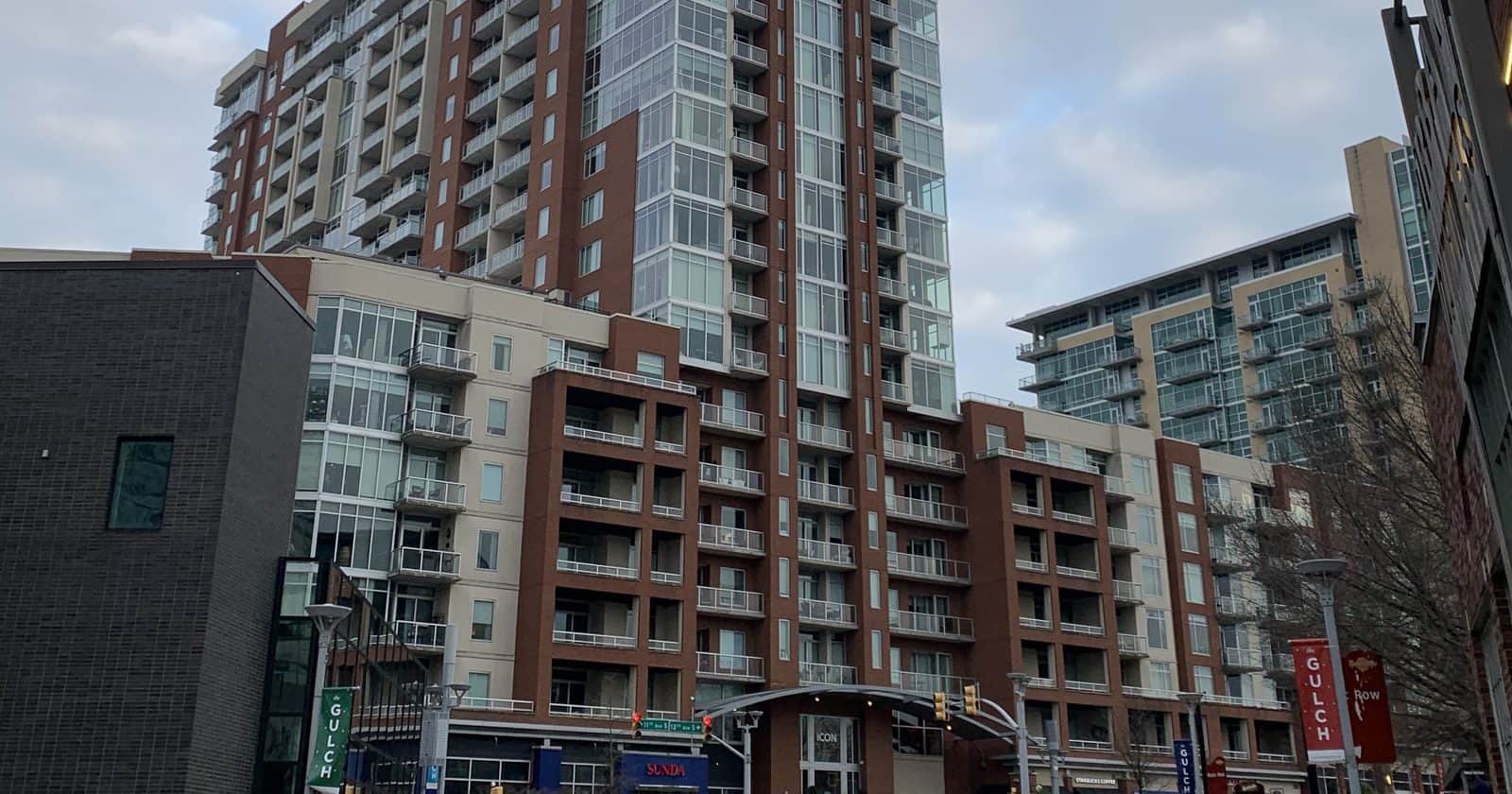
The Gulch Nashville: ICON tower seen from 11th Avenue, with Gulch street banners at street level
The ICON tower in the Gulch, seen from 11th Avenue. Photo by Brichar60 / Wikimedia Commons / CC BY-SA 4.0, cropped.

The Gulch Nashville is the city’s most urban neighborhood. High-rise condos and apartments sit on top of restaurants, rooftop pools look at the skyline, live music is a short walk from the lobby, and Broadway is minutes away. It is also one of the higher-priced places to live in Nashville, and the buildings back that up with concierge desks, pool decks and views.

This is the Nashville Area Homes guide to the Gulch. Nashville Area Homes is owned by Candie and Mike Worsham, licensed Tennessee brokers. Below is what the neighborhood is like, which buildings are condos and which are rentals, and what to ask before you sign anything.

Where is the Gulch in Nashville?

The Gulch is in the 37203 ZIP code, on the southwest edge of downtown and next to Music Row. The streets you will hear most are 11th Avenue South, 12th Avenue South, Division Street, Laurel Street, Pine Street and Demonbreun Street. Walk north on 11th or 12th and you reach Broadway and Union Station. Walk up the hill on Division and you are on Music Row. SoBro, Midtown, Edgehill and Wedgewood-Houston all touch its edges.

What is it like to live in the Gulch?

It is a neighborhood you walk. Coffee, brunch, dinner, a cocktail on a rooftop and a live show all fit inside a few blocks.

Here is the other side of it. The Gulch sits between the interstate and Broadway, so there is traffic noise, weekend crowds on the main streets, and construction that has not really stopped (we wrote about buying or selling near new construction). Walk the block on a Saturday night before you buy. Some people love the energy and some want a quieter street, and a unit on the back side of a building can feel like a different address.

What restaurants and live music are in the Gulch?

The food range is wide. Biscuit Love and Milk & Honey handle brunch. Ladybird Taco is a quick Mexican street food stop. The Iberian Pig does tapas, and Kayne Prime is a steakhouse. The Thompson Nashville hotel has Marsh House for seafood and a rooftop bar, L.A. Jackson, with skyline views from the top floor.

The music is real. The Station Inn opened in 1974, started by a group of bluegrass pickers and singers, and it has been at 402 12th Avenue South since 1978. It is still a listening room for bluegrass and classic country. Rudy’s Jazz Room is a few blocks away.

The walls talk too. The best known mural is the What Lifts You wings mural at 302 11th Avenue South, painted in 2016 by artist Kelsey Montague. People stand between the wings for a photo and share it with the hashtag #WhatLiftsYou. There are pocket parks and public spaces too: Noble Park, with its water walls, Grace’s Alley, a narrow pedestrian lane strung with lights, and the Gulch Dog Park.

What is the history of the Gulch?

The Gulch was a railroad yard before it was a neighborhood. The Nashville and Chattanooga Railroad was chartered in 1845, the first railway in Tennessee. Union Station at 1001 Broadway opened in 1900 and is a hotel today. Redevelopment began in the early 2000s, and at the end of 2008 the Gulch was certified LEED Silver for neighborhood development by the U.S. Green Building Council, which is why you still see reused industrial buildings between the towers.

What kinds of homes are in the Gulch?

Every home in the Gulch is in a multi-family building. The official Gulch directory lists 15 residential buildings as of November 11, 2026: 6 condominium buildings you can buy into and 9 apartment buildings you rent.

The condominium buildings:

  • Twelve Twelve, 1212 Laurel Street. A glass tower of 286 residences, nearly 60 percent of them two bedrooms or larger, completed in October 2014. It has a saline pool and spa, a green roof, outdoor kitchens, a 3,800 square foot fitness center, a dog wash and two guest suites.
  • Terrazzo, 700 12th Avenue South. Fourteen stories with a sixth-floor pool terrace, 24-hour concierge, underground parking and 11-foot-4-inch ceilings. The penthouses are two-story homes with ceilings up to 20 feet.
  • ICON, 600 12th Avenue South. A high-rise with a fitness center, a pool and covered parking.
  • The James, 1002 Division Street. The smallest of the group at 31 condominium residences, in one- and two-bedroom plans, some two-story, with a terrace and lounge and a secured garage.
  • Pullman at Gulch Union, 1212 Demonbreun Street. A 29-story, 300-residence tower, the newest of the condo buildings, with the first owners moving in during 2024.
  • Society Nashville, 915 Division Street. Listed under both condos and apartments in the directory, so confirm which units are for sale.

The apartment buildings: Albion in the Gulch, Aspire Gulch, Camden Gulch, Crossroads at The Gulch, Laurel House Lofts, Mercury View Lofts, Modera Gulch, Pine Street Flats and Prima at Paseo South Gulch. Several have rooftop pools, sky lounges and concierge service, and Pine Street Flats is LEED certified.

A condominium downtown isn’t just two bedrooms and two bathrooms. It might offer the convenience of walking to restaurants, enjoying live music, meeting friends for coffee, or having entertainment just steps from the front door.

That is an entirely different lifestyle from a home on five acres in the country. Neither is necessarily better.

Two units in the same building can feel like different homes. Floor, view, finish level and which way the unit faces all change what you are buying, so a low price on a unit is a reason to ask why.

How do parking and getting around work in the Gulch?

If you have a car, parking takes planning. Metro Nashville manages the metered street spaces and sets the rates and time limits, which change, so read the posted signs and pay stations. The garages and lots are privately run, and some are owned by MarketStreet Enterprises. Public parking can be hard to find on a busy night.

Ask each building how parking works for your unit. Is the space deeded, assigned or leased? Is there room for a second car? Where do your guests park? The answers differ from tower to tower.

You can skip the car for a lot of trips. WeGo buses run through and around the district, and the WeGo Star commuter train stops at Riverfront Station downtown on weekdays. Nashville BCycle has an electric bike-share station at 11th Avenue South and Pine Street, and the Gulch has bike lanes. Interstate 40 runs along its edge, and Nashville International Airport is a little over 5 miles away.

What should I ask before buying a condo in the Gulch?

When you buy a condominium you are buying into the building’s association as much as the unit. Read the HOA documents the way you would read an inspection report. Get these questions answered:

  • What are the monthly dues, and what do they cover?
  • How much is in the reserve fund, and is a special assessment planned?
  • What are the rules on pets and parking?
  • What do the documents say about leasing the unit?

Short-term rentals need their own look. In Davidson County, renting a place short term depends on its zoning and a valid Metro permit, and many buildings ban it or limit leasing in their own documents. Never assume a unit can go on a rental platform. Check the master deed, the bylaws and the zoning for that parcel before you count on the income.

What does it cost to live in the Gulch?

The Gulch is one of the higher-priced parts of Nashville. This article does not put a price number on it, because a number on a web page is old by the time you read it. Prices, dues and taxes are different in every building and on every floor. Ask for current figures on the exact unit you like: the listing, the association’s resale documents and the property tax record from the Davidson County Assessor of Property.

The market is not one market, either. Our post on why Nashville neighborhoods behave like separate markets explains why the Gulch can move differently from the rest of town, and our guide to buying in Nashville covers the basics.

Call Candie and we will pull them with you.

Common questions about the Gulch Nashville

Is the Gulch walkable?

Yes. Restaurants, coffee, shops, live music and the murals are all within a few blocks of the residential buildings, and there are bike lanes and bike-share stations for longer trips.

Are Gulch homes condos or apartments?

Both. The official directory lists 6 condominium buildings and 9 apartment buildings. Confirm what a specific unit is in the recorded master deed and the Davidson County property records.

Can I rent out a Gulch condo as a short-term rental?

Only if Metro zoning, a valid Metro permit and the building’s own documents all allow it. Many associations restrict or prohibit it. Read the bylaws before you buy.

Is the Gulch loud?

It can be. The neighborhood sits between the interstate and Broadway, with weekend crowds and ongoing construction. Visit at night and on a weekend, and ask about the exposure of the unit you are considering.

Which schools serve the Gulch?

Public schools in the Gulch are part of Metro Nashville Public Schools. Zoning can change, so confirm the current assignment for any address with the district before you make an offer. Our post on how to check a school boundary walks through it. Nashville Area Homes follows fair housing law.

What transit is near the Gulch?

WeGo buses run through and around the district, and the WeGo Star commuter train stops at Riverfront Station downtown on weekdays. Check current routes, fares and schedules with WeGo.

Call Candie. (615) 208-3313.

Buying or Selling a House Near New Construction in Nashville

When new homes go up near an existing house, buyers start comparing the older house to brand-new finishes, layouts and systems, and the way the older house should be priced changes with them. Check what is planned or permitted nearby through the city or county. Ask your agent how older sales apply. And treat any sale that closed before the building started as a question, not an answer.

Nashville Area Homes is owned by Candie and Mike Worsham, licensed Tennessee brokers with more than 30 years in Middle Tennessee real estate. This guide is for anyone buying a house near new construction, and for sellers nearby. It describes how building activity changes the picture. It does not predict where values will go, and nobody can promise that.

An area with a lot of building in it does not behave like a settled one. Pulling comparable sales from an unchanging stretch is one job. Pricing or buying where the surroundings are changing is another.

The Nashville Area Homes team, who help buyers when buying a house near new construction

What changes when you are buying a house near new construction?

The comparison set grows. Buyers measure an existing house against new finishes, new layouts and new systems, and not only against other resales. That can help a seller or hurt one, depending on how the home is positioned and priced next to what is newly available.

For a buyer, it means more to compare and more to ask. For a seller, it means some of the competition may not have existed a year ago.

How do buyers compare a resale with new construction?

Line the two up on the same terms.

  • Layout and finishes. What does each one offer, and what would you change?
  • Systems and age. On the resale, ask the age of the roof, the heating and cooling, and the water heater. On the new build, ask what is new.
  • Lot and yard. Compare sizes and where the house sits on the lot.
  • Warranty. Ask whether a builder warranty applies to the new home and get the terms in writing. Ask what the seller of the existing home will disclose.
  • Timeline. A home under construction has a completion date that can move. A resale has a possession date you can plan around.
  • Fees. Ask what any neighborhood association charges and what the charge covers.

Neither choice is better by default. The right comparison is the one that fits what you need.

How do you find out what is being built nearby?

Go to public records before you go to conversation.

Building permits are kept by the city or county codes or permits office, and many offices publish them online. Rezoning and planning filings sit with the planning or zoning office, which posts applications and meeting agendas. Rezoning requests often come with a notice posted on or near the site. Planning commissions and councils publish their agendas ahead of time.

In Nashville, the Metro Nashville Planning Department reviews zoning and subdivision applications and handles rezoning requests.

Then see it in person. Drive or walk the area at different times of day and note the signs, the cleared lots and the work underway.

Ask your agent to pull whatever they can find. Part of local knowledge is knowing which office to ask, which we explain in What a Local Real Estate Agent Should Know Before You Sell.

What do permits and zoning activity tell you?

They point forward. A building permit, a rezoning filing or a new commercial project nearby is more than background noise. It shows what is planned or underway along a street or corridor, often before it shows up in closed sale prices. An agent who follows that activity can price closer to where the market is, and not only where it has been.

They don’t tell you how it will turn out. A permit shows what someone applied to build, not what the result will be. Treat these as facts about plans. What they mean for value is a question to talk through.

Can you trust older comparable sales in a changing area?

Be careful with them. A sale from a while back may already be a poor reference, because the surroundings it closed in may not be the surroundings a buyer sees today.

As an example, say a house sold eighteen months ago, before nearby building started. That sale may not describe what a buyer walking through the area now will see. This is where “a comparable is a question, not an answer” matters most. Ask which sales your agent used, when each one closed, and what has changed nearby since.

We cover this in Why “Comparable Sale” Doesn’t Mean What You Think It Means. Online estimates have the same limits, described in What a Home Value Estimate From an App Can’t Tell You.

What should you ask about the building itself?

Buyers near active building ask practical questions, and they are good ones. What is planned, and on what schedule? How long is work expected to continue? Where will access and truck traffic change? Are there recorded easements or boundary changes? That last one is covered in The Invisible Lines Around Your Lot.

Visit at different times of day. Ask the city or county for the plans on file. Ask your agent what they know and what they have verified, and listen for the difference.

What should a seller near new construction do?

Price the home against what buyers can see today, newly available homes included, and not against the last few closed sales alone. Be ready to explain what your home offers, with dates for any updates.

Candie’s guidance on pricing applies here as much as anywhere. In her third Morning Memo she says: “That’s why you want to be priced right the day you come on the market.” A listing that starts too high loses its first and strongest weeks. See Starting High to Leave Room to Negotiate Can Backfire.

If the area around you is changing, say so in your pricing conversation and ask your agent how they have accounted for it.

Is the Nashville area one market?

No. Conditions differ from one part of the area to the next, and sometimes from one street to the next. Our piece on why Nashville is not one market explains why a rule that holds in one place may not hold in another. To talk through a specific address, call (615) 208-3313 or contact us.

Common questions about buying a house near new construction

How does new construction nearby affect buyers’ comparisons?

Buyers compare an existing house against brand-new homes on finishes, layout and systems, as well as against other resales. Pricing and positioning matter more as a result.

Where can I see what is planned near a home?

Your city or county permits office and planning or zoning office publish permits, rezoning applications and meeting agendas. Your agent can help you find them.

Do building permits tell me what will happen to home values?

No. A permit shows what has been applied for or approved. It is a fact about plans, and what it means for value is something to discuss, not a guarantee.

Are older home sales reliable in a changing area?

They can be a poor reference. The surroundings may have changed since the sale. Ask your agent when each comparable closed and what has changed nearby since.

Should I ask a builder about a warranty?

Yes. Ask whether a warranty applies, what it covers and how long it lasts, and get the terms in writing.

Can anyone tell me if now is a good time to buy or sell near new construction?

Nobody can promise that. An agent can show you what is for sale, what has sold, what is planned, and how those facts apply to your situation. The decision is yours.

General information note: This article is general information in our own words. It is not legal, tax or financial advice, and it is not a recommendation of any neighborhood, school or district. Confirm school assignment with the school district. Nashville Area Homes follows federal and Tennessee fair housing law.

Candie Worsham, Nashville Area Homes. 3102 West End Ave, Suite 400, Nashville, TN 37203.

What School Zone Am I In? How to Check a Boundary Before You Trust It

What school zone am I in? To check a school zone, look up the exact street address on the school district’s own zone or school finder tool, and get the answer in writing from the district when a decision depends on it. A map you saved last year, a listing description or something a neighbor said is a place to start. None of those is proof.

Nashville Area Homes is owned by Candie and Mike Worsham, licensed Tennessee brokers who have worked in Middle Tennessee real estate for more than 30 years. This guide shows how to find the official answer for an address.

Conference room at Nashville Area Homes where we help buyers and sellers check what school zone an address is in

School assignment comes up on both sides of a sale. Buyers want the answer before they write an offer. Sellers want to describe their home accurately. In both cases the only answer worth relying on is the district’s.

What school zone am I in, and who decides?

The school district does. Each district sets its attendance zones, publishes them and runs enrollment. Real estate agents, listing sites and neighbors don’t decide assignment, and none of us can change it.

Middle Tennessee has several districts, and some sit right next to each other. Which district an address belongs to is the first thing to confirm, because each district has its own lookup tool. Addresses in and around one city can fall in different districts, so don’t go by the mailing address alone. The county or city website, or the property record, will show the district.

Where do you look up the official zone?

Start with the district for your address. These are the official pages for five Middle Tennessee districts, each checked on November 8, 2026. Every district runs its own tool and can change its page, so use these as a starting point.

If your address is in a district that isn’t listed here, go to that district’s own website and look for “school zones,” “zoning” or “school finder.” We left out any page we couldn’t confirm.

Why can’t you trust a map you saved last year?

Zone lines move. A board can adopt a new boundary, a new campus can open, and an existing zone can be redrawn. A map that was right six months ago may be wrong today, and a saved PDF can’t tell you it went out of date.

When you look at any map, find the date and the school year it covers. If you can’t find a date, treat the map as a question and go straight to the district’s tool.

We ask the same habit of everyone about anything secondhand. Local knowledge includes knowing which facts have a source and which are just repeated. We wrote more about that in What Local Knowledge Actually Means When You’re Selling in Nashville.

Does living near a school mean an address is zoned for it?

No. Being a few blocks from a campus doesn’t mean the address is assigned there. Zones can overlap, one street can split between two zones, and capacity limits can change who is assigned. Close and assigned are two separate facts.

It can run the other way too. An address that seems far from a campus may be assigned to it. Only the lookup tells you.

How do you check a school zone for an address, step by step?

  1. Get the full street address, including the unit number for a condo or townhome.
  2. Confirm which school district the address is in. The county or city site or the property record will show it.
  3. Go to that district’s website and find its school zone, school finder or address lookup tool. The links above are the place to start.
  4. Enter the address exactly as written. Save a screenshot or a printed copy of the result, and note the date.
  5. If the result is unclear or isn’t what you expected, call the district’s enrollment or zoning office and ask.
  6. Ask the district how assignment is confirmed for the coming school year and whether any change is scheduled.

If your decision depends on the answer, ask for it in writing. An email from the district office is worth more than a phone call you have to remember.

What about optional programs and school choice?

Some districts offer optional, magnet or charter programs, and those can follow separate application rules and deadlines from the regular zone. The district publishes those rules. If a program matters to you, ask the district how it works for your address, because the zone lookup alone may not cover it.

What if a listing mentions a school?

Read it as a pointer. A listing description is written at one moment by someone who isn’t the district.

Check the address with the district yourself. It takes a few minutes.

When should a buyer check?

Before writing an offer, and again before closing if anything about the timeline or the district’s plans has changed. If a school assignment is part of why you’re buying, treat it like any other fact you’d verify before committing, such as the lot size or the square footage.

What should sellers do about school zone information before listing?

Don’t put assignment in your marketing as a fact unless the district confirms it. Print the district’s result for your address with the date on it, and keep it with your listing papers. If a buyer asks, point them to the district’s tool, which is the same place we’d send them.

The same rule applies to the lines on the land itself. Easements and setbacks are another place where a recorded fact beats a guess, and we cover them in The Invisible Lines Around Your Lot.

What does a Nashville Area Homes agent do and not do here?

We give you sources so you or a buyer can verify assignment and enrollment independently.

Nashville is more than one market, and more than one school district. Our piece on why Nashville is not one market explains why the answer for one street may not apply two streets over.

If you’re getting ready to sell and want to know how we work, read How to Choose a Listing Agent and The One Question Every Seller Should Ask Before Hiring an Agent. Or call us at (615) 208-3313 or contact us.

Common questions about school zones

How do I find out which school an address is zoned for?

Use the school district’s own zone or address lookup tool with the full street address. Save the result with the date. If the result is unclear, call the district’s enrollment or zoning office.

Is a school close to a house the same as being zoned for it?

No. Distance and assignment are separate. Zones can overlap, a street can split between zones, and capacity limits can change who is assigned. Only the district can confirm assignment.

Can a school zone change after I buy or sell?

Yes. Districts can change their zones, and the timing is the district’s to decide. We can’t predict what a district will do. Ask the district what is scheduled, and look up the address again before you make a decision.

Can I rely on a school name in a listing description?

Treat it as a pointer. Descriptions are written at one point in time and don’t come from the district. Verify the address with the district before you rely on it.

Who do I contact at the district?

Look for the enrollment, student assignment or zoning office on the district’s website. Ask for the answer in writing if your decision depends on it.

General information note: This article is general information in our own words. It is not legal, tax or financial advice, and it is not a recommendation of any neighborhood, school or district. Confirm school assignment with the school district. Nashville Area Homes follows federal and Tennessee fair housing law.

Candie Worsham, Nashville Area Homes. 3102 West End Ave, Suite 400, Nashville, TN 37203.

Nashville Neighborhoods and Why the Market Is Really Many Markets

Nashville neighborhoods behave like separate markets, and a citywide number can’t tell you which one your home is in. Nashville Area Homes is owned by Candie and Mike Worsham, licensed Tennessee brokers who have worked in Middle Tennessee real estate for more than 30 years.

There is no single Nashville real estate market. There are many small ones, and they change from one neighborhood to the next, from one street to the next, and sometimes from one house to the next. A citywide headline can tell you when to start paying attention. It can’t price your home. For that you have to look at the homes that actually compete with yours and check the facts about your address.

Nashville Area Homes conference room where we compare Nashville neighborhoods address by address with buyers and sellers

What does “the Nashville real estate market” actually mean?

When people say it, they usually mean a headline. A median price, maybe, or an average number of days a home sits before it sells. Those figures blend thousands of very different homes together: condos and farmhouses, new builds and fifty-year-old ranches, small lots and acreage.

A blended number is a fair way to start a conversation. It is a poor tool for making a decision. Your home is not the average of anything. It is one house on one lot on one street, with its own condition and its own list of likely buyers.

Why can’t one citywide number price my house?

Because the buyers for your home are not the buyers for the whole city. Here is how we put it:

“A citywide statistic about average days on market or median price tells you almost nothing about what a buyer will actually pay for your specific house on your specific street.”

Think about what a buyer really does. They don’t shop Nashville. They compare a short list of homes that fit what they need, and your home is either on that list or it isn’t. If your price makes sense against those homes, you are in the conversation. If it only makes sense against a citywide chart, you aren’t.

We wrote about how those comparisons get chosen in Why “Comparable Sale” Does Not Mean What You Think It Means.

How do Nashville neighborhoods differ in ways that matter to a sale?

Look at the facts that show up in a sale. These change how a home is priced, marketed and inspected.

  • Age and style of the homes. Some areas are mostly newer construction. Others are mostly older homes, with the updates, systems and surprises that come with age.
  • Lot size. Lots vary a lot, even inside one neighborhood. Yard size, slope and privacy change what a home is worth to the buyers who want them.
  • Commute and access. Drive time to work or to the interstate matters to many buyers, and it changes by the hour of the day.
  • Which government applies. Davidson County and Williamson County have different governments and different school systems. A home’s address, not its name, decides which one applies.
  • Flood and zoning status. These are set by parcel, not by neighborhood name.

Our community pages describe the areas we work in, including Green Hills, Brentwood, Franklin and Belle Meade. They are listed as a convenience and are not a recommendation of any area. Use them as a starting point, then check the facts for the specific address you care about.

Does it go deeper than the neighborhood line?

Yes, and this is where a lot of pricing mistakes begin. As we put it, “price point, condition, lot size, and even which street a home sits on can change the real competition entirely.”

Two homes in the same zip code can sit in different markets. One is on a through street, the other at the end of a dead end. One was updated last year, and one still has its original kitchen. One backs up to open space and one to a fence. A buyer sees all of that. A citywide chart sees none of it.

That is why local knowledge is more than knowing a neighborhood name. It means knowing the street. We explain what that looks like in What Local Knowledge Actually Means When You Are Selling in Nashville.

What should I check by address before I trust any number?

Don’t rely on a neighborhood name alone. For any home you are buying or selling, check these by the property’s address.

  1. School assignment. Boundaries change, and a home near a line can fall on either side. Confirm the assignment with the school system itself, and do it before you make any decision that depends on it. Our post Three Questions to Ask Before You Trust a School Boundary walks through how.
  2. Flood status. Look up the parcel on the FEMA Flood Map Service Center. Don’t guess from the street or the neighborhood.
  3. Zoning and overlays. Zoning can affect what a buyer can build, add or do with the property. Check the parcel with the city or county planning office.
  4. Property lines and easements. What you can see and what is recorded are not always the same. A survey and the title work tell the real story.
  5. Taxes and utilities. These depend on the jurisdiction and the property. Ask, and get the answer in writing. The county and city websites have the current figures.

None of this is exciting. All of it can change a deal.

What does a narrow comparison look like?

I would rather show a seller five carefully examined properties that truly compete with their home than fifty loosely related records from a citywide search. Five good comparisons beat fifty loose ones.

A narrow look asks plain questions. Is the size close? Is the condition close? Is the lot close? Would the same buyer be choosing between the two? Where a comparison breaks down, a good agent says so and explains the adjustment.

An online estimate can’t do this work. It doesn’t know your kitchen or your lot. See What a Home Value Estimate From an App Cannot Tell You. If you want us to look at your home specifically, our market analysis page is the place to start.

How do I ask my agent to zoom in?

If your agent’s whole pricing conversation is a citywide chart, ask them to zoom in. A few questions help.

  • Which specific homes did you pick to compare to mine, and why those?
  • Which homes did you leave out?
  • What makes my home different from each of them?
  • How did you check my school assignment, flood status and zoning?
  • What would change your recommended price?

An agent who has done the work will answer these easily. More interview questions are in How to Choose a Listing Agent Before You Sign.

Common questions

What is the Nashville real estate market doing right now?

It depends which part you mean and which kind of home. A citywide number mixes too many different homes to be useful on its own. If you are thinking about buying or selling, ask for an analysis of the homes that actually compete with the one you care about. You can ask us for one on our market analysis page.

Why does my neighbor’s sale not tell me what my house is worth?

A neighbor’s sale is a useful data point, but only if the homes are truly alike. Condition, updates, lot, street and timing can all change the result. A good agent will tell you how much weight a nearby sale deserves and why.

How do I confirm the school assignment for a specific address?

Yes. School assignments follow boundaries tied to addresses, and boundaries can change. Confirm the assignment for the specific address with the school system before you rely on it.

How do I check flood and zoning information for a specific house?

Look up the parcel’s address on the official flood maps and with the city or county planning office. These facts belong to the parcel, not the neighborhood. If you are working with us, we will help you check them early, before they turn into a surprise.

Can I talk to Candie and Mike about my neighborhood?

Yes. We would be glad to talk through your specific street and home. Call (615) 208-3313 or contact us.

Candie Worsham, Nashville Area Homes. 3102 West End Ave, Suite 400, Nashville, TN 37203.

General information note: This article is general information in our own words. It is not legal, tax or financial advice, and it is not a recommendation of any neighborhood, school or district. Confirm school assignment with the school district. Nashville Area Homes follows federal and Tennessee fair housing law.

Is Now Actually a Good Time to Sell in Nashville?

If you’ve been sitting on the fence about listing your home, wondering whether now is a good time to sell in Nashville, you’re asking exactly the right question at exactly the right moment. The answer isn’t a simple yes or no, but it is a lot more encouraging than a lot of headlines make it sound.

The lopsided seller’s market of the past few years has cooled off. Inventory is up across Middle Tennessee, buyers have real choices again, and homes aren’t flying off the market in a weekend the way they were in 2021 and 2022. But cooled off doesn’t mean cold. It means the market has become balanced. Balanced markets don’t punish sellers, they punish sellers who price and market their homes carelessly.

Nashville Area Homes is owned by Candie and Mike Worsham, licensed Tennessee brokers. Here is how we think about timing a sale, and what to weigh before you decide.

Nashville Area Homes conference room where we talk with sellers about a good time to sell in Nashville

Pricing Strategy Is Everything Right Now

In a market like this one, the biggest mistake a seller can make is testing the ceiling. Overpricing a home to “leave room to negotiate” doesn’t create leverage anymore. It creates a listing that sits, picks up a stale-listing stigma, and eventually has to chase the market down with price cuts instead of leading it. Buyers today are comparison shopping. They know what similar homes in your neighborhood are actually selling for, and an overpriced house just tells them to keep scrolling. Recorded sales are public record through the Davidson County Register of Deeds, and our post on how agents pick comps shows how to read them.

The homes moving quickly right now are the ones priced realistically from day one, priced to reflect the market as it actually is, not as it was two years ago. That’s not settling for less. It’s the strategy that actually protects your equity and gets you to closing faster.

Why Waiting Doesn’t Necessarily Help

We hear it often: “Maybe we should just wait until spring.” Sometimes that makes sense. But waiting isn’t free. Carrying costs, continued wear on the home, and the uncertainty of where rates and inventory will be in six months are all real trade-offs. Homes are taking a bit longer to sell than they did last year, but well-priced, well-marketed homes are still moving fast. The sellers who wait indefinitely for the market to “come back” often end up selling into conditions that are no better, and sometimes worse, than today’s.

Nashville’s Growth Story Isn’t Slowing Down

Even with a more balanced market, Middle Tennessee’s fundamentals remain strong. Continued corporate relocations, major developments like Nashville Yards and the investment surrounding Nissan Stadium, and steady in-migration from other states keep real demand flowing into the market. Buyers are still choosing Nashville. They’re just being more selective about what they pay and where they put their money, which is exactly why pricing strategy matters more than ever.

Is Now a Good Time to Sell in Nashville? What It Means for You

Is now a good time to sell in Nashville? For most homeowners with equity, a home in good condition, and a clear reason to move, the answer is yes, provided the pricing and marketing strategy actually matches today’s market instead of yesterday’s. That’s the conversation worth having before you ever put a sign in the yard.

If you’re weighing whether to list now or wait, let’s look at your specific home, your neighborhood’s current activity, and build a pricing strategy that gets it sold, not just listed. Reach out and let’s talk through it. If you are already leaning toward listing, start with how to get your house ready to sell and how to choose a listing agent. Thinking about buying instead? Read why now can be a good time to buy in Nashville.

Common questions

Is now a good time to sell in Nashville?

For most homeowners with equity, a home in good condition and a clear reason to move, yes, provided the pricing and marketing strategy matches today’s market instead of yesterday’s.

Should I wait until spring to sell?

Sometimes that makes sense. But waiting is not free. Carrying costs, continued wear on the home and uncertainty about where rates and inventory will be in six months are all real trade-offs.

How should I price my home right now?

Price it realistically from day one, based on what similar homes in your neighborhood are actually selling for. Pricing high to leave room to negotiate tends to produce a listing that sits and then has to chase the market down with price cuts.

Is the Nashville market still growing?

Middle Tennessee’s fundamentals remain strong. Corporate relocations, major developments like Nashville Yards and steady in-migration keep demand flowing into the market, though buyers are more selective about price.

How do I find out what my home could sell for?

Call Candie at (615) 208-3313 or send a message, and we will look at your home and your neighborhood’s current activity together.

Now Is a Good Time to Buy in Nashville: Here’s Why

Is now a good time to buy in Nashville? For the past few years, many buyers have been sitting on the sidelines, waiting for mortgage rates to drop or home prices to fall dramatically. While it’s understandable to hope for the “perfect” time to buy, today’s Nashville market is offering opportunities that many buyers are overlooking.

Nashville Area Homes is owned by Candie and Mike Worsham, licensed Tennessee brokers. Here is why we think many buyers are overlooking this market, and what to weigh before you decide.

Nashville Area Homes conference room where we talk with buyers about a good time to buy in Nashville

Less Competition Means More Negotiating Power

Not long ago, buying a home in Nashville often meant competing with multiple offers, waiving contingencies, and paying well above the asking price. Today’s market is much different. Buyers now have more time to view homes, negotiate repairs, request seller concessions, and carefully evaluate their options. In many cases, sellers are willing to help with closing costs or even contribute toward reducing a buyer’s mortgage interest rate. That’s something we simply didn’t see during the peak of the market.

More Homes to Choose From

Inventory has improved significantly in many Nashville neighborhoods. Instead of feeling pressured to make an offer within hours, buyers can compare homes and prices before making one of the biggest financial decisions of their lives. Having choices is a tremendous advantage.

You Can Always Refinance Later

One of the biggest concerns buyers have today is interest rates. While no one knows exactly where rates are headed, one thing is certain: if rates decline in the future, homeowners may have the opportunity to refinance. However, if home prices continue to appreciate, buyers who wait could end up paying considerably more for the same home. The Consumer Financial Protection Bureau’s buying a house guide is a good place to compare loan offers before you commit. You can refinance your mortgage. You can’t refinance the purchase price.

Nashville Continues to Grow

People keep moving to the Nashville area. Strong job growth, healthcare, education, entertainment, and a vibrant economy continue to attract new residents every year. Long-term population growth has historically supported home values throughout Middle Tennessee. While real estate markets naturally fluctuate, Nashville continues to have strong long-term fundamentals.

Sellers Are Becoming More Realistic

Today’s sellers understand that pricing a home correctly is more important than ever. We’re seeing more price adjustments, motivated sellers, and homes that represent excellent value compared to what buyers faced just a couple of years ago. For prepared buyers, this creates opportunities that didn’t exist during the height of the market.

Buying Is About More Than Timing the Market

The best time to buy isn’t necessarily when interest rates are at their lowest or when everyone else is buying. The best time is when purchasing a home fits your financial goals, lifestyle, and long-term plans. If you plan to stay in your home for several years, short-term market fluctuations become much less important than finding the right property at the right price. Our buyer’s guide walks through exactly what to expect at each stage, from financing to closing.

A Quick Recap

  • Less buyer competition means more room to negotiate repairs, price, and closing costs.
  • More homes on the market give you time to compare instead of rushing a decision.
  • You can refinance a mortgage rate later, but you can’t refinance the price you paid.
  • Nashville’s long-term growth continues to support home values across Middle Tennessee.
  • Sellers are pricing more realistically, creating real value for prepared buyers.

Is Now a Good Time to Buy in Nashville? My Perspective

After more than 30 years helping buyers and sellers throughout the Nashville area, I’ve learned that the headlines don’t always tell the whole story. Every market creates opportunities. Today’s market happens to favor informed buyers who are willing to negotiate, be patient, and think long term. If you’re wondering whether now is the right time for you to buy, reach out and let’s talk. I’d be happy to discuss your goals and help you understand what’s happening in today’s Nashville market, without any pressure. If you are also thinking about selling first, read whether now is a good time to sell in Nashville, and see buying a house near new construction and how to read a home inspection report before you make an offer. You’re also welcome to browse our current listings to get a feel for what’s available right now. Candie Worsham Broker/Owner, Nashville Area Homes “Helping buyers and sellers make smart real estate decisions for more than 30 years.”

Common questions

Is now a good time to buy in Nashville?

Today’s market gives buyers less competition, more homes to choose from and more room to negotiate. The best time to buy is when a purchase fits your financial goals, lifestyle and long-term plans.

Can I refinance later if rates drop?

If rates decline in the future, homeowners may have the opportunity to refinance. You can refinance a mortgage, but you cannot refinance the purchase price, so waiting for lower rates carries its own risk if prices keep appreciating.

Can I negotiate repairs and closing costs?

Buyers now have more time to view homes, negotiate repairs and request seller concessions. In many cases sellers are willing to help with closing costs.

Is Nashville still growing?

Strong job growth, healthcare, education and entertainment continue to attract new residents, and long-term population growth has historically supported home values across Middle Tennessee.

Where should a first-time buyer start?

Our buyer’s guide walks through each stage from financing to closing, and you can call Candie at (615) 208-3313 with questions.

Welcome to Our New Blog!

Welcome to our new blog, and to the new NashvilleAreaHomes.com. We built this site, and this blog, to make finding your next home in Middle Tennessee easier, and to tell you what is actually happening in the neighborhoods we work in every day. If you have questions, reactions, or topics you want us to cover, leave a comment. We read every one.

Nashville Area Homes is owned by Candie and Mike Worsham, licensed Tennessee brokers.

Nashville Area Homes conference room, where we write our new blog for buyers and sellers

Welcome to Our New Blog: What Is New on the Site

You can search homes across Nashville, Franklin, Brentwood, Belle Meade, Green Hills and every neighborhood in between. Browse current listings, see what is happening in the market, and get to know the team who will help you get there. More tools are coming in the weeks ahead, including smarter ways to search and ways to track your home’s value.

  • Sign up or log in to save favorite listings, track price changes, and pick your search back up where you left off.
  • Browse our current listings.
  • See something you love? Call, text, or use the contact form and we will get started.

What You’ll Find on the Blog

Whether you are buying, selling, or just curious, this blog is for you. We will cover:

  • Neighborhood spotlights on Belle Meade, Brentwood, Franklin, Green Hills, and the surrounding communities
  • Current market trends and what they mean for buyers and sellers
  • Tips for first-time buyers on financing, offers, and inspections
  • What to expect when listing your home, from pricing to closing day
  • Honest takes on what the headlines get right and wrong about the local market

Same Team, Same Dedication

The site is new. We are not. Candie and Mike Worsham have more than 60 years of combined real estate experience, and an entire roster of agents ready to go above and beyond for you. You can check any Tennessee real estate license with the Tennessee Real Estate Commission. Good decisions come from good information, and national headlines rarely tell the full story about a specific street in Brentwood or a subdivision in Franklin. This blog is where we fill in that gap.

A Few Questions We Hear Often

How often will new posts go up?

We publish new posts regularly, covering timely tips for buyers and sellers and whatever is moving in Middle Tennessee real estate. Good places to start are how to choose a listing agent, Nashville neighborhoods and whether it is a good time to sell in Nashville.

Can I request a topic?

Absolutely. Drop a comment on any post or send us a message. If enough people are asking the same question, there is a good chance it becomes its own post.

Do I need to be buying or selling right now to find this useful?

Not at all. Plenty of readers just want to understand their own neighborhood or keep an eye on trends before they are ready to move. That is what this blog is for.

Want to know more about who we are? Visit our About Us page or reach out anytime. We are so glad you are here.

Candie Worsham
Nashville Area Homes